
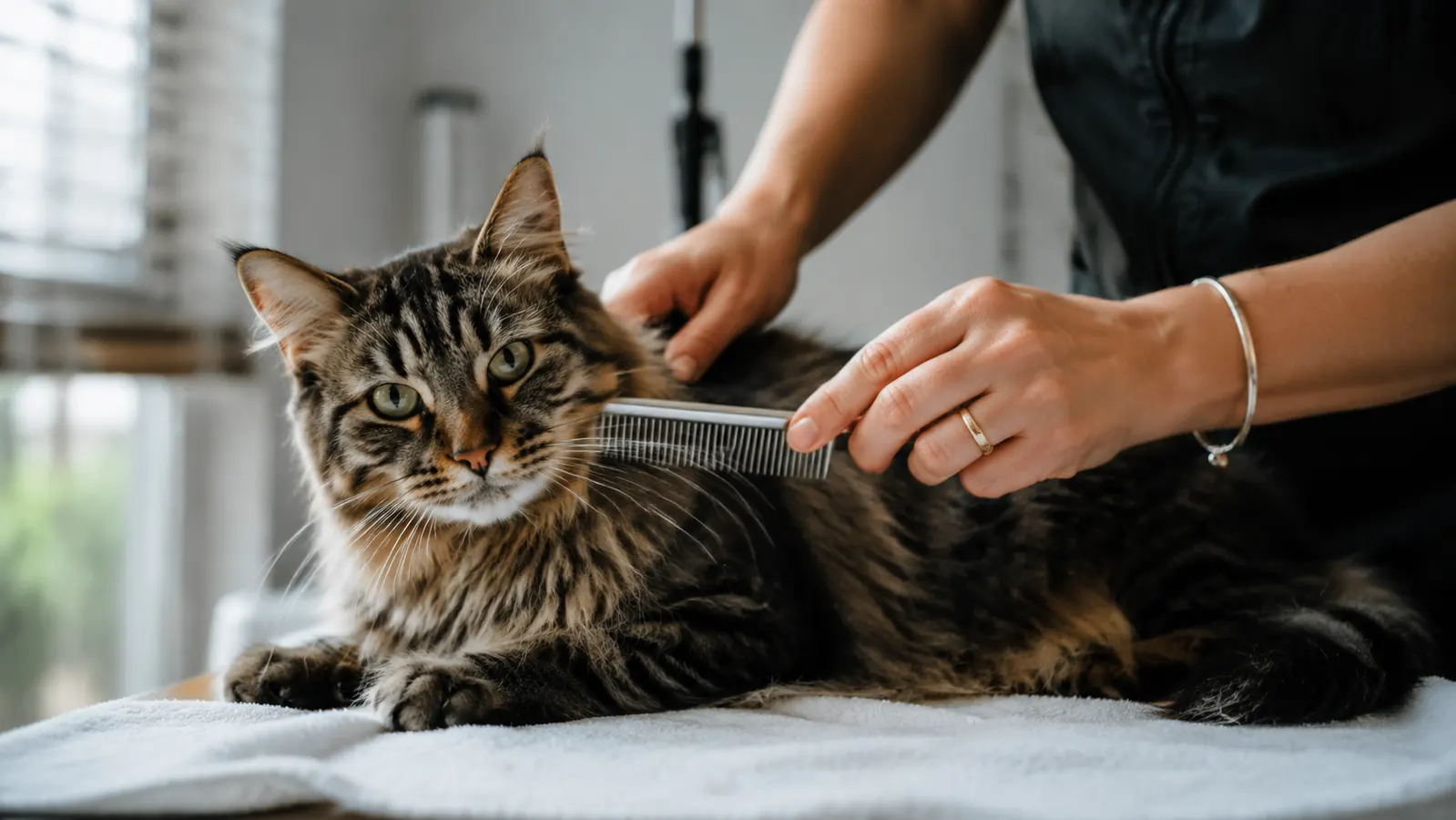
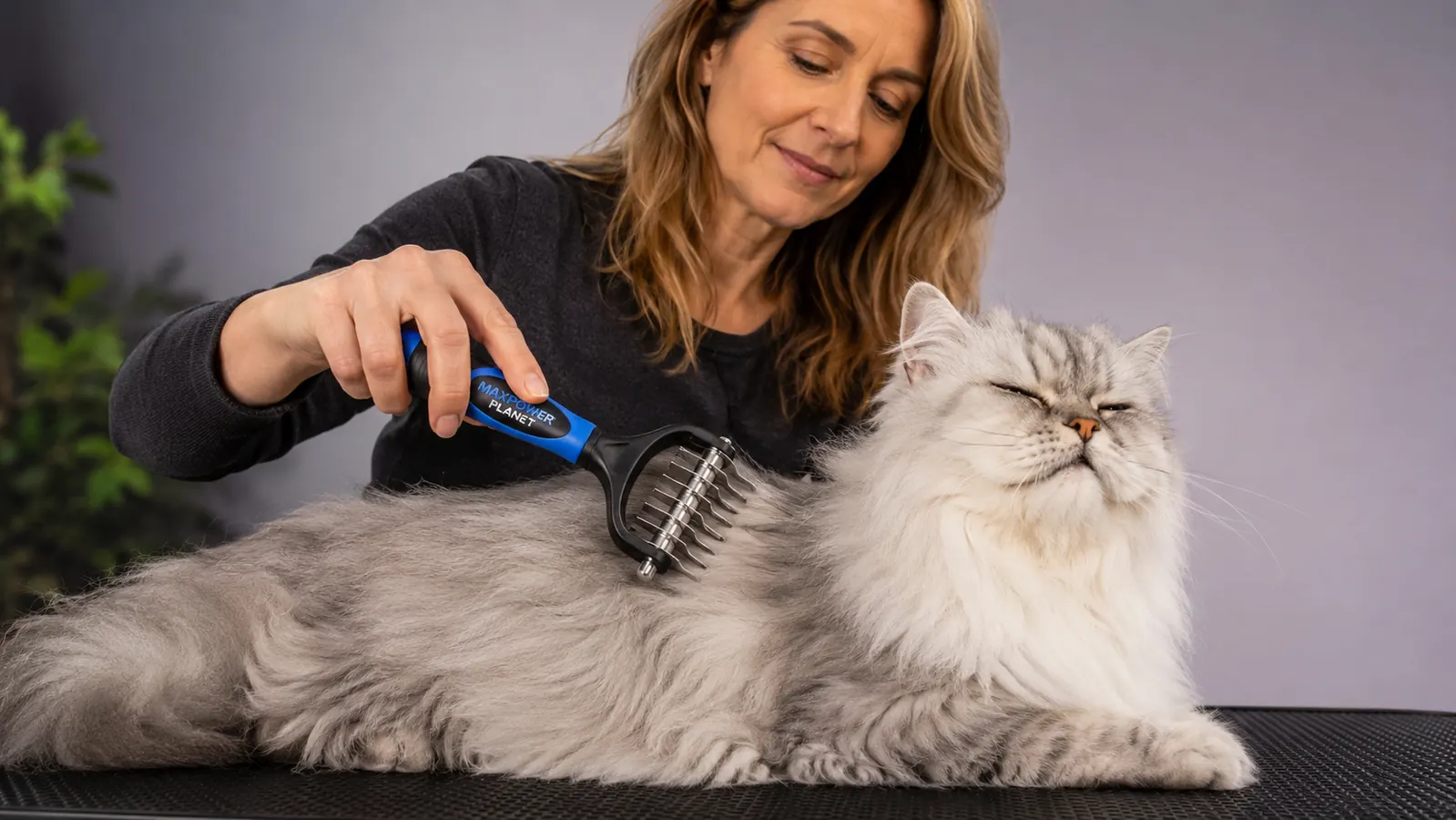
We bought the Maxpower Planet deshedding rake because our tabby mix, Clover, sheds like she is paid by the follicle. Eight years old, about 10 pounds, a medium-length coat that sits somewhere between 'shorthair' and 'floofy enough that strangers comment on it.' Clover leaves fur on every dark surface in the house and she does it year-round without any seasonal excuse. After seeing the Maxpower rake sitting at the top of the Amazon grooming category with 57,000-plus reviews and a 4.6-star average, we figured it was a safe buy. What we did not expect was how much the user reviews were missing.
This is the review we wish existed before we opened the box. We dug into the one- and two-star complaints, cross-referenced them against our own experience with Clover, and talked to a few other cat owners who had returned it. The tool is genuinely good under the right conditions. The problem is that a lot of people buy it under the wrong ones, and the product listing does almost nothing to help them figure that out in advance.
The Quick Verdict
A strong deshedding rake for cats with dense, medium-to-long coats who tolerate firm grooming pressure. For short-coated cats, grooming-averse cats, or anyone expecting a plug-and-play experience, there is a real risk of disappointment or a scratched-up cat.
Amazon Check Today's Price →Your cat leaves fur on everything and you want it gone before the next guest arrives. The Maxpower rake is the most-returned grooming tool we know of, but also the most-loved. Read this before you order.
The Maxpower Planet double-sided rake is budget-friendly. If your cat is the right fit, it works remarkably well at that price. See the current price and full listing details on Amazon.
Amazon Check Today's Price on Amazon →How We Tested It (and What Surprised Us First)
Clover is not a difficult cat to groom. She sits reasonably well for short sessions, tolerates a slicker brush across her back, and will only object loudly if you hit the base of her tail or try to do her belly. We figured a rake-style tool would slot into her routine without drama. The first session told a different story.
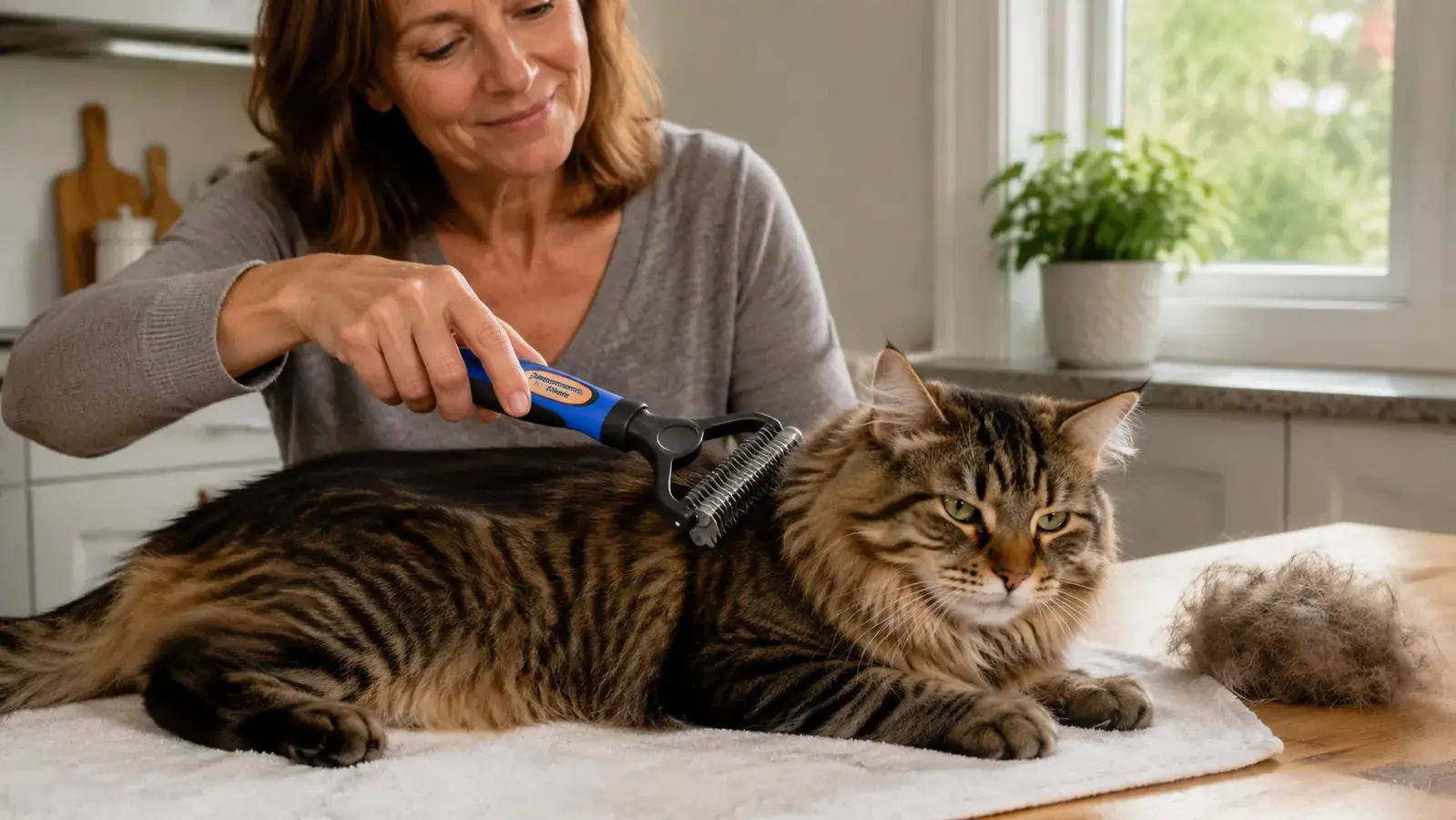
When we ran the fine deshedding side across Clover's shoulder blades with moderate pressure, she flinched and twisted around to look at us. Not a yowl, not a swipe, but a very clear 'what was that' reaction. The tines on the deshedding side are closely spaced and, when pressed firmly into a medium coat, they sit closer to the skin than we expected. On a long-haired, dense-coated cat, that same pressure is cushioned by several centimeters of fur before the tines reach skin. On a medium coat, there is less buffer. Lesson one: lighter pressure than you think, slower strokes than feel natural.
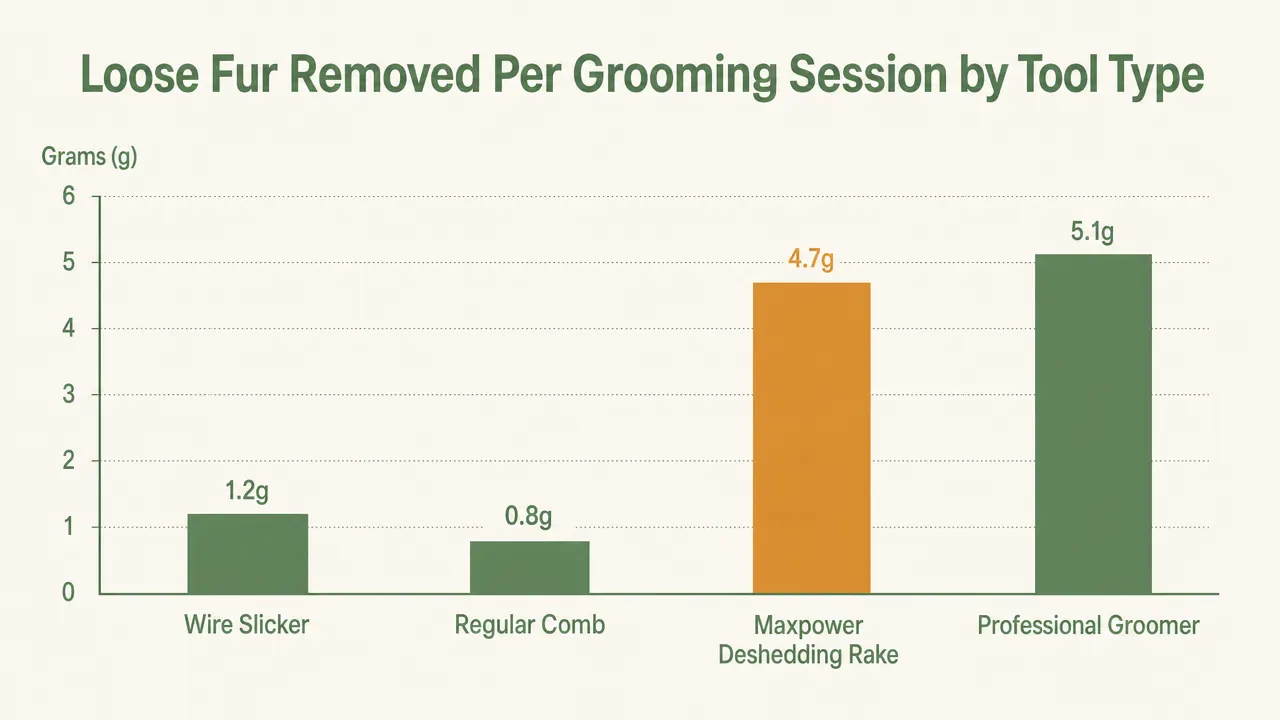
By session three, Clover had adapted and we had dialed back our pressure. The results were genuinely impressive. A single ten-minute session removed what looked like enough fur to knit a small sock. The deshedding side in particular is effective at pulling loose undercoat from a medium coat once you find the right stroke weight. But getting there required two sessions of cautious adjustment, and we can see exactly why owners who push too hard in session one end up writing a one-star review and returning the tool.
The Tines Are Sharper Than They Look on Camera
This is the complaint we saw most often in the negative reviews, and it is the one the product photos do the least to communicate. The stainless steel tines on both sides are not blunt. They are not razor-sharp either, but when you press them into fur with any real force, you are pushing steel tips toward skin. On a long-haired cat with a thick undercoat, this is fine. The fur absorbs the pressure. On a short-coated cat or any cat with a thin single-layer coat, that force goes directly to the skin surface.
The dematting side, with its nine wider-spaced tines, is the more aggressive of the two. Those tines have a slight curve at the tip and are designed to grab and work through tangles. Applied with too much force against a mat that is sitting close to the skin, they will scratch. We did not scratch Clover, but we came close during one session when we tried the dematting side on a small tangle at her collar line. She made a sound we have not heard from her before and that session was over.
The fix is simple but not obvious from the product listing: keep one hand at the base of the fur, pulling the skin slightly taut, while the other hand runs the rake. This reduces the pulling tension on the skin and gives you tactile feedback about how close the tines are getting. Experienced groomers do this automatically. First-time rake users do not. That gap in technique explains a significant share of the negative reviews.
Who Actually Returns This Rake and Why
We read through several dozen one- and two-star reviews for patterns. Three categories of return buyer came up over and over.
The first group bought it for a short-haired cat. Siamese, domestic shorthair, Abyssinian, Rex breeds. For these cats, the tine spacing on both sides is mismatched to the coat. The deshedding side goes straight to skin, the dematting side has nothing meaningful to work through, and the experience tends to be uncomfortable for the cat and frustrating for the owner. A rubber grooming glove or a fine-tooth comb handles short coats far better.
The second group had a severely matted cat and expected this tool to solve it. The Maxpower rake handles small to moderate tangles well. It is not a dematting specialist for badly packed, tight mats close to the skin. Mats that have been sitting for months, especially on a cat who resists all grooming, need either a professional groomer or a dedicated mat splitter tool with a safety guard. Trying to force the rake through a severe mat is how owners end up scratching their cat and sending the tool back.
The third group had grooming-averse cats who would not tolerate any rake-style tool, full stop. This is not really a failure of the Maxpower rake. Any tool that requires multiple slow strokes with firm-ish contact will face the same rejection from a cat who hates being touched for more than a few seconds. But because the Maxpower is the most visible option in the category, it takes the return blame.
What Nobody Mentions: Technique Is Half the Product
After three months of using this rake on Clover, we are convinced that the results people get are about 50% the tool and 50% how they use it. The star rating reflects the experience of owners who figured out the technique. The low-star reviews mostly reflect owners who either had the wrong cat for the tool or applied it the way you would use a slicker brush, which is too fast, too firm, and without the skin-stabilizing hand.
The specific things that made the biggest difference for us: slow strokes in the direction of fur growth, not against it; light initial pressure that increases only when the tines are clearly moving through loose coat rather than dragging against skin; clearing the tines every three passes instead of letting fur pack in and reduce the tool's effectiveness; and always starting on the back and shoulders where cats are least sensitive before working toward the neck, stomach, or tail base.
None of this is rocket science, but none of it is on the product page either. If the listing said 'best for medium to long coats, requires light initial pressure, not recommended for short single-layer coats or severe mats,' we think the return rate would drop substantially. The information gap is doing real damage to the product's reputation in the one-star reviews.
The Maxpower rake is a technique-sensitive tool sold as a plug-and-play product. That gap between what people expect and what it actually requires explains most of the bad reviews, not the tool itself.
Where It Actually Performs Well
With Clover, the best results have come from using only the deshedding side, starting with very light pressure, and treating it more like a wide-toothed comb than a brush. On her shoulders and along her spine, one pass removes a visible strip of loose undercoat that no brush in our kit was reaching before. The fur that comes off is the soft, fluffy undercoat layer, not the top coat hairs, which is what you actually want to remove. Top coat removal does nothing for shedding on your furniture. Undercoat removal does.
The build quality is genuinely good for the price. Three months of twice-weekly use and the tines have not bent, the handle has not cracked, and the rubberized grip has not started peeling. We ran it through the sink with dish soap twice and it came out clean. At this price point, we would have been happy with a tool that lasted a year. This one feels like it will go longer.
For multi-cat households with different coat types, the double-sided design does offer real flexibility. We know owners who use the dematting side on their Persian and the deshedding side on their domestic medium-hair in the same session. Having both in one handle is genuinely useful when you are not buying a separate tool per cat. That said, the deshedding side is the one doing most of the work in the average household. The dematting side is a bonus for the cats who need it.
The Honest Verdict on Price vs Performance
At a budget-friendly price, the Maxpower rake is hard to argue with if your cat is in the right coat category. The per-session value, once you have the technique dialed in, is better than anything in its price range we have tested. The fur yield is real, the build quality holds, and most cats in the medium-to-long coat range will tolerate it once they have had a few sessions to adjust.
But we want to be direct about the experience gap. This is not the kind of tool you pull out of the box, run down your cat's back, and immediately marvel at. The first two or three sessions are a calibration period, both for you and for your cat. If you go in expecting a passive, effortless experience because of the star count, you will likely be disappointed. If you go in knowing that technique matters and that short-coated cats are not the target, you have a good chance of having the same experience as the five-star reviewers.
We also want to flag that this rake is not a substitute for professional grooming when mats are already severe. If your cat has tightly packed mats sitting against the skin, take them to a groomer first and use the rake going forward as a prevention tool. Trying to rake through a serious mat at home is where cats get scratched and owners lose confidence in the product entirely.
What I Liked
- Excellent undercoat removal on medium and long coats when used with correct technique and light initial pressure
- Double-sided design covers both loose shedding and light tangles without swapping tools
- Build quality is solid for the price point, tines hold their spacing after months of regular use and repeated washing
- Fur yield per session is noticeably higher than a standard slicker brush once technique is established
- Price is low enough that a multi-cat household can buy two and keep one per grooming station
Where It Falls Short
- Fine tines sit close to skin on short and single-layer coats, causing discomfort if pressed firmly; not ideal for shorthair breeds
- Dematting side requires a careful, practiced hand near skin; can scratch if forced through a tight mat without holding the fur base
- No guidance on technique or coat-type suitability in the product listing, which drives a disproportionate share of negative reviews
- Does not replace a professional groomer for severe or long-standing mats; marketed broadly but works best in a narrow coat range
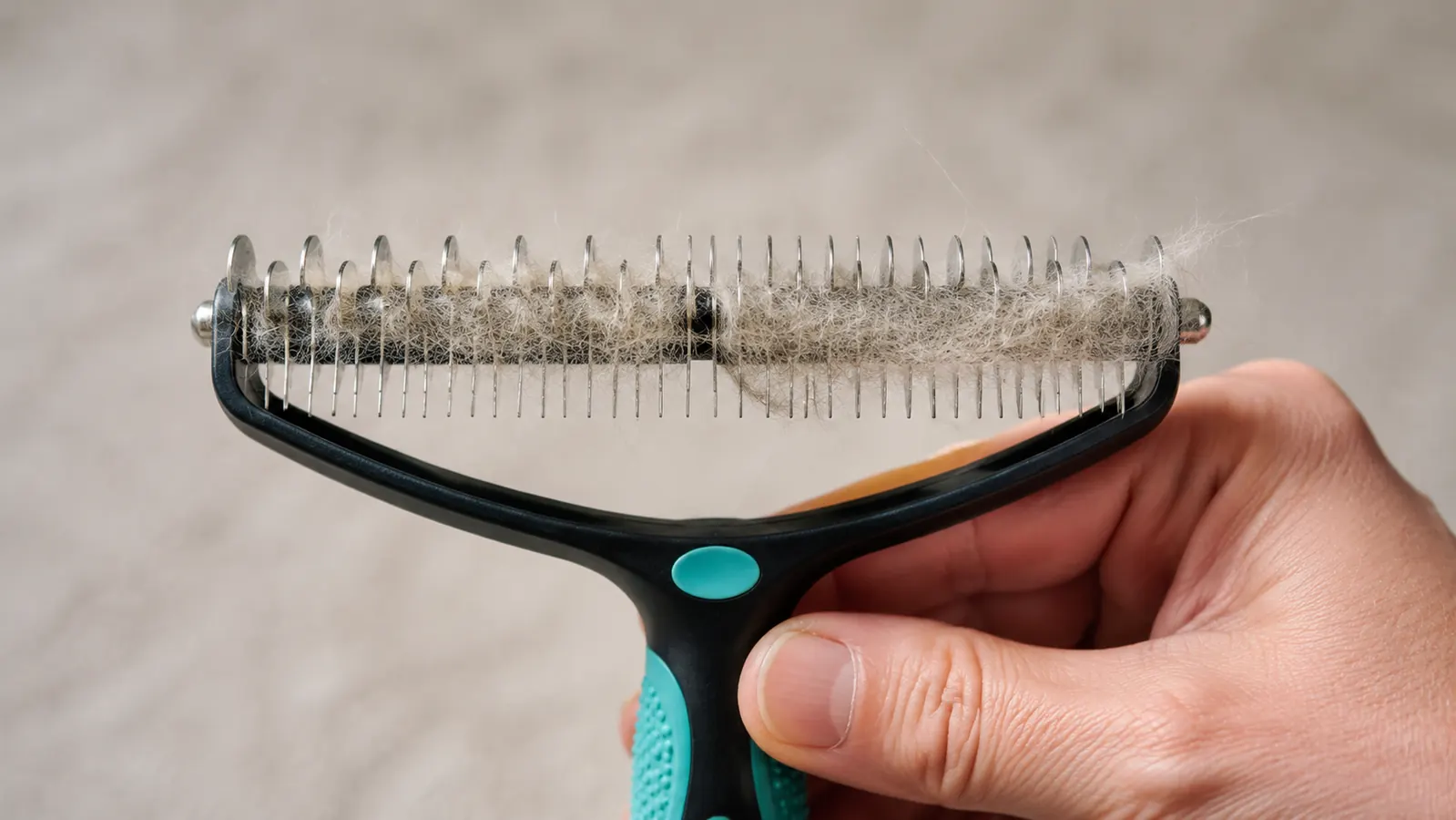
- Tines clog after two to three passes on heavy shedders, requiring frequent clearing to stay effective throughout a session
Who This Is For
Buy the Maxpower rake if your cat has a medium to long coat with a real undercoat layer, you are willing to spend the first couple of sessions learning the right pressure, and your cat is not severely mat-packed already. Ragdolls, Norwegian Forest Cats, Persians, long-haired domestic mixes, and medium-coat cats like Clover who shed consistently but do not have extreme mat problems are the right audience. If that describes your cat, you will probably end up in the five-star group. The tool genuinely delivers at its price point once you understand what it needs from you.
Who Should Skip It
Skip it if your cat has a short, single-layer coat. Burmese, Siamese, Cornish Rex, most standard domestic shorthairs with thin coats. The tool is not built for their fur profile and the experience will likely be uncomfortable for the cat and unimpressive for you. Also skip it if you are dealing with severe mats that have been sitting for more than a few weeks or if your cat is grooming-intolerant and you have not built a grooming habit at all yet. In both cases, start with a groomer and build from there. The Maxpower rake rewards cat owners who already have a loose grooming routine and want to do more of it at home, not owners who are starting from zero with a difficult coat situation.
If your cat has a medium or long coat and you are ready to put in two sessions learning the right technique, this rake is genuinely worth the price.
The Maxpower Planet double-sided rake is one of the better grooming investments for the right coat type. Check the current price on Amazon and see why it has earned 57,000 reviews, the real ones, from owners who matched the tool to their cat correctly.
Amazon Check Today's Price on Amazon →