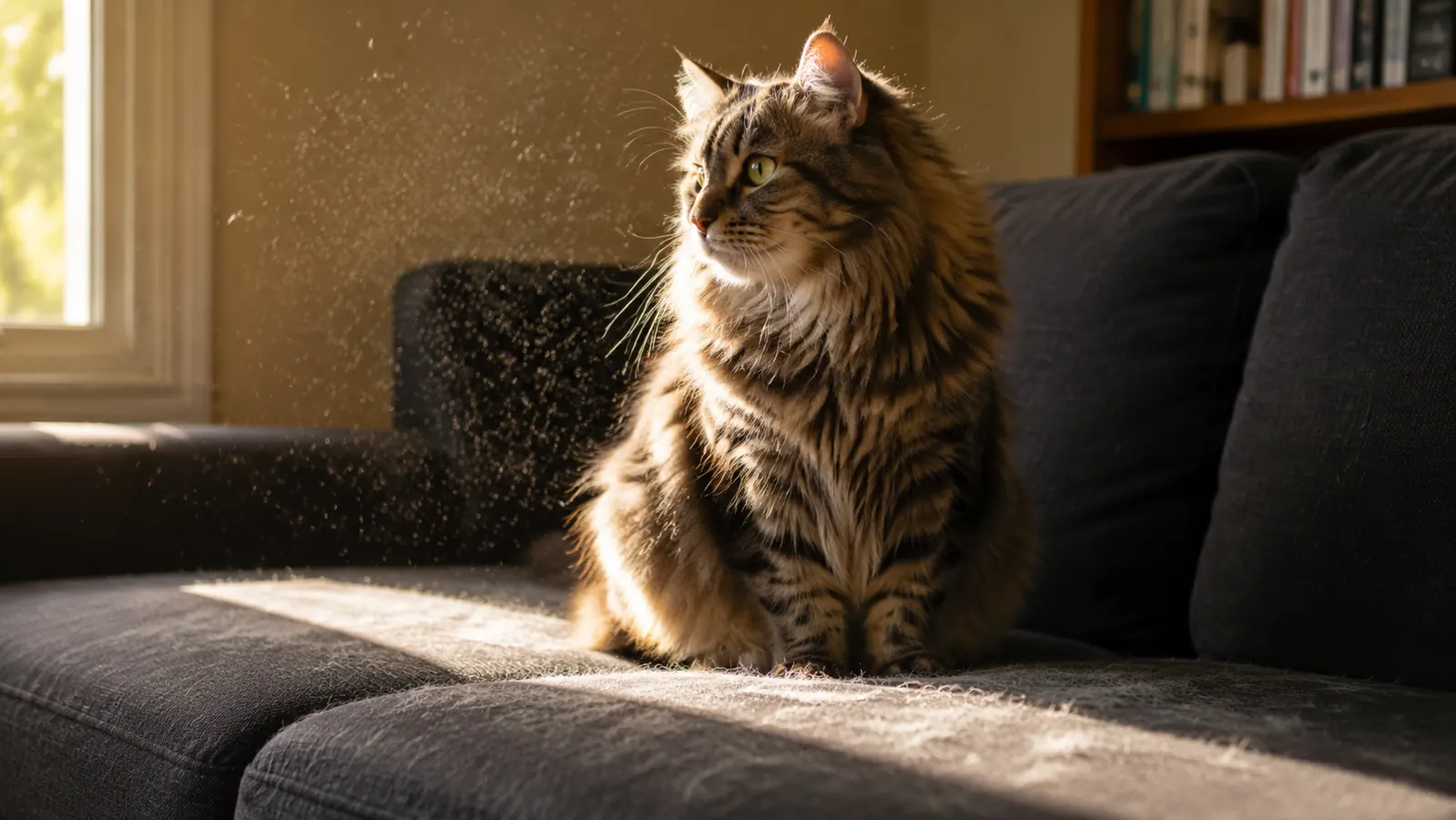
If you have ever pulled on a dark sweater only to arrive at work looking like a walking lint trap, you already know the drill. Cat fur gets everywhere, and for most of us it feels like it gets worse every season. The good news: most heavy shedding is completely normal and manageable once you understand what is driving it. We have spent a lot of time tracking down the root causes with our own cats, and the Maxpower Planet Double-Sided Deshedding Rake (ASIN B07P2N8HQH, rated 4.6 stars across more than 57,000 reviews) has become the tool we reach for every single time.
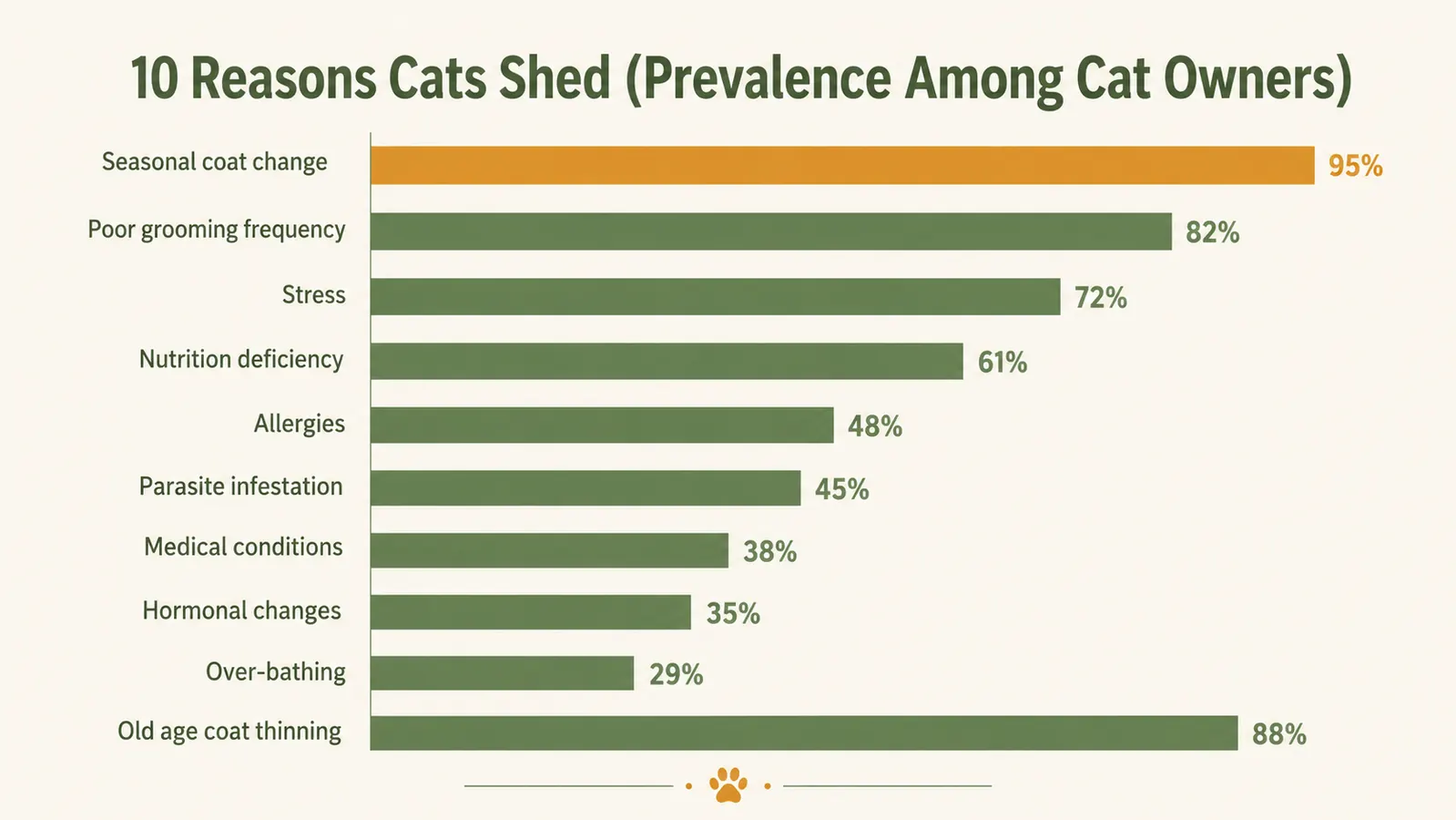
Below are the 10 reasons your cat is shedding so heavily, plus the specific thing we do about each one. Not every reason needs a grooming tool. But when one does, we tell you exactly how we use the rake to handle it.
Your cat is not broken. Their coat just needs a real deshedding tool, not a cheap plastic comb.
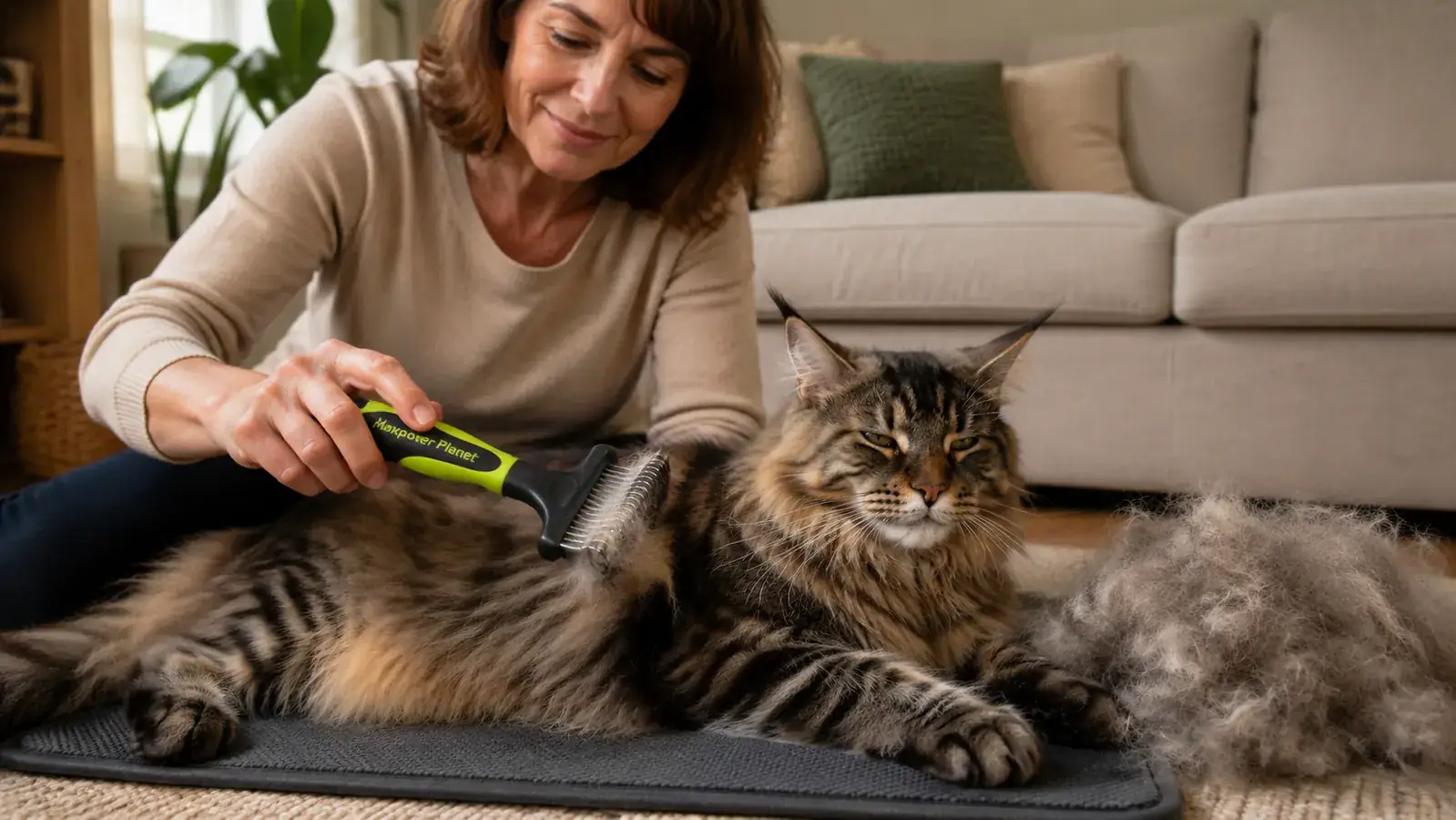
The Maxpower Planet rake is what we keep in the drawer next to the couch. Two sides, one for thick undercoat and one for fine surface fur, and it pulls out an astonishing amount of loose hair in a single five-minute session. Over 57,000 reviewers agree it is the easiest low-cost upgrade for any cat household that wrestles with fur.
Amazon Check Today's Price on Amazon →Seasonal Coat Blowout
Most cats shed heavily twice a year: spring and fall. In spring they drop their thick winter undercoat; in fall they shed the summer coat to make room for the winter one. If your cat suddenly looks like a fluff factory in March or October, this is why. The fix is consistent grooming during peak blow-out weeks. We run the wide-tine side of the <a href="/maxpower-deshedding-rake-review-long-term">Maxpower Planet rake</a> through our cat's back and sides every other day during those six-to-eight week windows, and the difference in ambient fur levels is dramatic.
Indoor Living and Artificial Light
Outdoor cats sync their coat cycles to daylight hours and temperature. Indoor cats are exposed to artificial light year-round, which confuses their internal clock and can cause low-level shedding all year instead of two clean seasonal spikes. There is no fix for this besides regular grooming. Indoor cats are not shedding "wrong" but their coat cycles never fully power down. Budget for weekly brushing as a normal part of cat ownership rather than a seasonal event.
Diet Low in Omega Fatty Acids
A coat is built from protein and fat. When a cat's diet is low in omega-3 and omega-6 fatty acids, the hair follicles become fragile and strands break off faster than they should. If your cat has a dull coat AND heavy shedding, diet is the first place to investigate. Look for a food that lists a named protein as the first ingredient and contains fish oil or flaxseed. You should see coat improvement in four to six weeks after switching.
Dehydration
Cats are notoriously bad drinkers, especially those on dry kibble. Low hydration leads to dry, brittle fur that sheds at higher rates. If your cat ignores the water bowl, a fountain with moving water often increases intake noticeably. Once hydration improves, the coat gets softer and sheds less aggressively over a few weeks.
Stress and Anxiety
Cats shed more when stressed. A move, a new pet, a change in the household routine, or even rearranged furniture can spike cortisol levels and trigger noticeable coat thinning within days. If the timing of heavy shedding lines up with a life change, stress is a strong candidate. Give your cat extra quiet time, predictable feeding schedules, and a safe retreat space. Gentle grooming sessions can double as calming contact during a rough adjustment period.
Breed and Coat Type
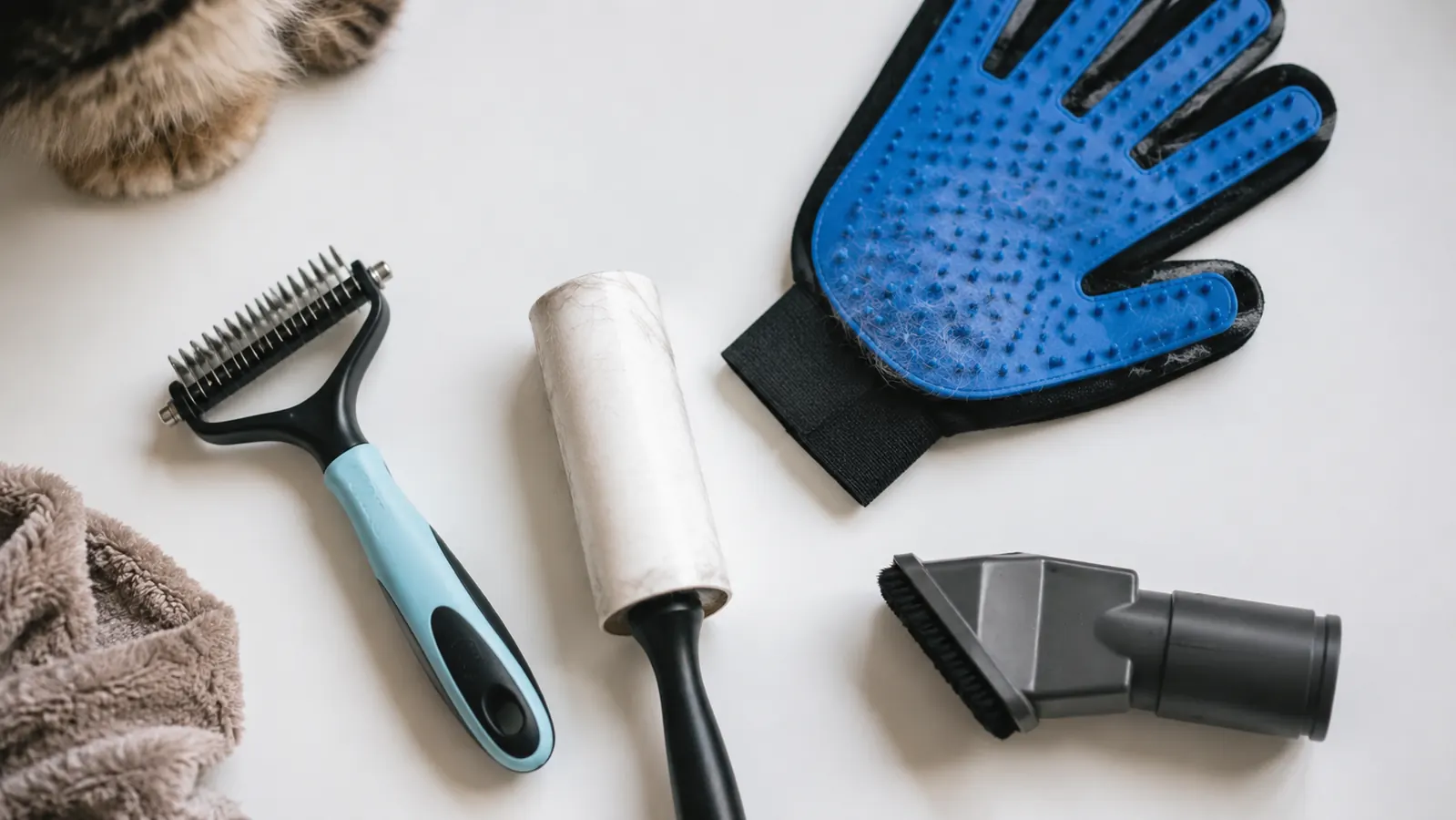
Long-haired breeds like Maine Coons, Persians, and Ragdolls carry dense double coats that shed in volume. Short-haired cats shed too but the individual hairs are less visible. If you have a double-coated breed, you need a rake with teeth long enough to reach the undercoat, not just a surface brush. The Maxpower Planet rake has two sides: nine wider-spaced teeth for the undercoat and 17 finer teeth for the top coat. We use both in the same session on our <a href="/maxpower-deshedding-rake-honest-review">Maine Coon and on our short-hair mix</a>, and both cats tolerate it well.
Parasites (Fleas, Mites, Ringworm)
Skin irritation from fleas or mites causes cats to scratch and bite at their coats, leading to patchy shedding and bald spots. This is one shedding cause that a grooming rake alone will not fix. Check for flea dirt (tiny black specks at the base of the fur near the tail) or any raw, red patches of skin. If you spot either, a vet visit is the right first step, not more brushing.
Hormonal Changes (Pregnancy, Heat, Aging)
Unspayed female cats shed heavily during pregnancy and nursing as the body redirects nutrients to the kittens. Cats in heat also sometimes shed more than usual. Older cats shed more as their skin becomes thinner and less efficient at retaining follicles. For aging cats especially, gentle grooming is important because they groom themselves less effectively. The softer side of a double-sided rake is kinder to thin senior skin than a stiff slicker brush.
Allergies and Skin Conditions
Environmental allergies, food sensitivities, and seborrhea can all cause chronic shedding that looks like a normal coat issue but does not respond to grooming alone. Signs include consistent dandruff, oily or flaky patches, or redness at the skin level. If regular brushing is not making a visible dent in shedding after four to six weeks, a vet skin check is worth scheduling.
Amazon Start with a Vet Check, Then Add a Grooming Routine →
Inconsistent or Zero Grooming
This is the most common and most fixable reason of all. Cats that are never brushed accumulate loose undercoat until it falls out on its own, landing on your couch, your pillow, and your black pants. A consistent five-minute weekly session removes that built-up fur before it migrates through the house. The Maxpower Planet rake is what we use precisely because it is fast. In one session it pulls more fur than a standard slicker brush does in three. The ergonomic handle means we can do a full pass without hand fatigue, which is why we actually do it regularly instead of skipping it.
What We'd Skip
Cheap rubber grooming gloves feel satisfying in a store but pick up almost no undercoat. They are fine for a quick pass on a short-hair who hates any kind of tool, but they will not move the needle on a heavy shedder. Single-sided fine-tooth combs bog down in a thick double coat and pull in a way that makes cats resistant to grooming sessions over time. We tried both before settling on the double-sided rake and we do not go back.
Five minutes with the right rake removes more loose fur than three sessions with the wrong tool. We learned that the hard way after a season of fighting with a rubber glove and a stiff slicker brush.
If you are tired of finding fur in every corner of your home, the tool matters more than the technique.
The Maxpower Planet Double-Sided Deshedding Rake has 4.6 stars from more than 57,000 buyers. It works on long coats and short coats, it does not require special cleaning, and the two-sided design means you can do a complete grooming pass without swapping tools. It is the first thing we recommend to any cat owner who asks us how to get fur under control.
Amazon Check Today's Price on Amazon →