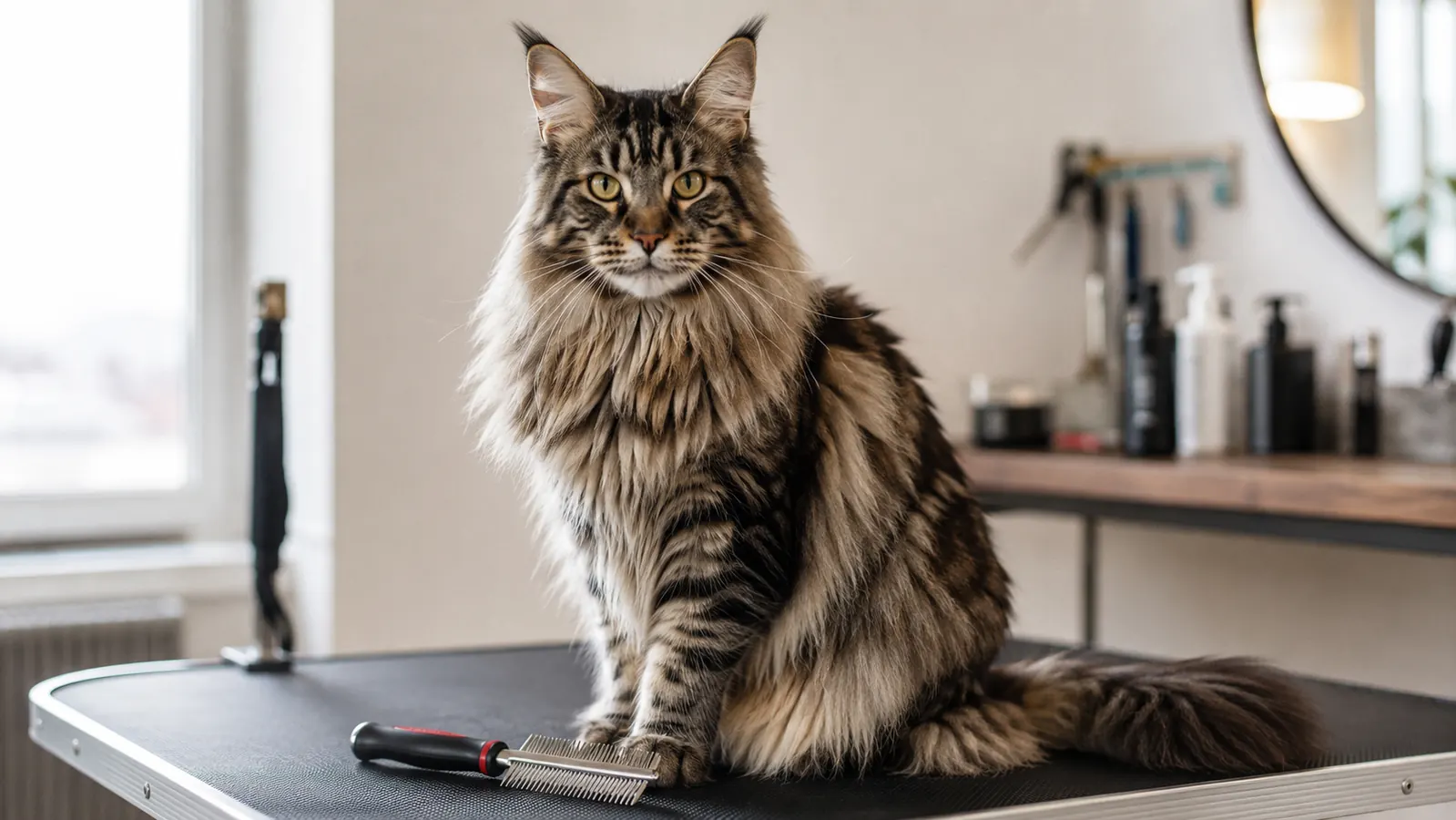
Our Maine Coon, Waffles, weighs 14 pounds and has the fur volume of a small throw rug. Every spring and fall, he sheds like he is personally offended by seasonal change. For years we rotated through whatever grooming tools looked promising on Amazon, slicker brushes, rubber curry combs, a stiff bristle brush that he tolerated exactly once. Nothing made a real dent. Then we picked up the Maxpower Planet double-sided deshedding and dematting rake in January, and we have been using it on him every single week since. Six months in, here is an honest account of what this tool does well, where it falls short, and who it is actually made for.
To be clear upfront: with over 57,000 Amazon reviews and a 4.6-star rating, the Maxpower rake is not some obscure product. It is the best-selling grooming rake on the platform by a wide margin. We wanted to know whether that reputation holds up over months of continuous use on a notoriously dense coat, not just for a first-impressions unboxing.
The Quick Verdict
A genuinely effective deshedding rake for cats with dense or long coats. The double-sided design earns its keep, the build quality held up across six months of weekly sessions, and the price is low enough that it costs less than one trip to the groomer. Minor cons: the dematting side requires a careful touch on sensitive skin, and the ergonomics are average.
Amazon Check Today's Price →If your cat is leaving fur on every surface in your home, this rake is worth trying before you book another groomer appointment.
The Maxpower Planet rake is budget-priced and handles both loose undercoat and small mats in one tool. See the current price on Amazon.
Amazon Check Today's Price on Amazon →How We Used It
We set up a consistent grooming routine from the start: every Sunday morning, fifteen minutes, on a yoga mat on the living room floor. Waffles is not a naturally cooperative groomer. He has strong opinions about his back legs and will walk away from a session mid-stroke if you push your luck. That behavioral baseline mattered because it gave us a real test of whether the tool was causing discomfort or whether Waffles was just being Waffles.
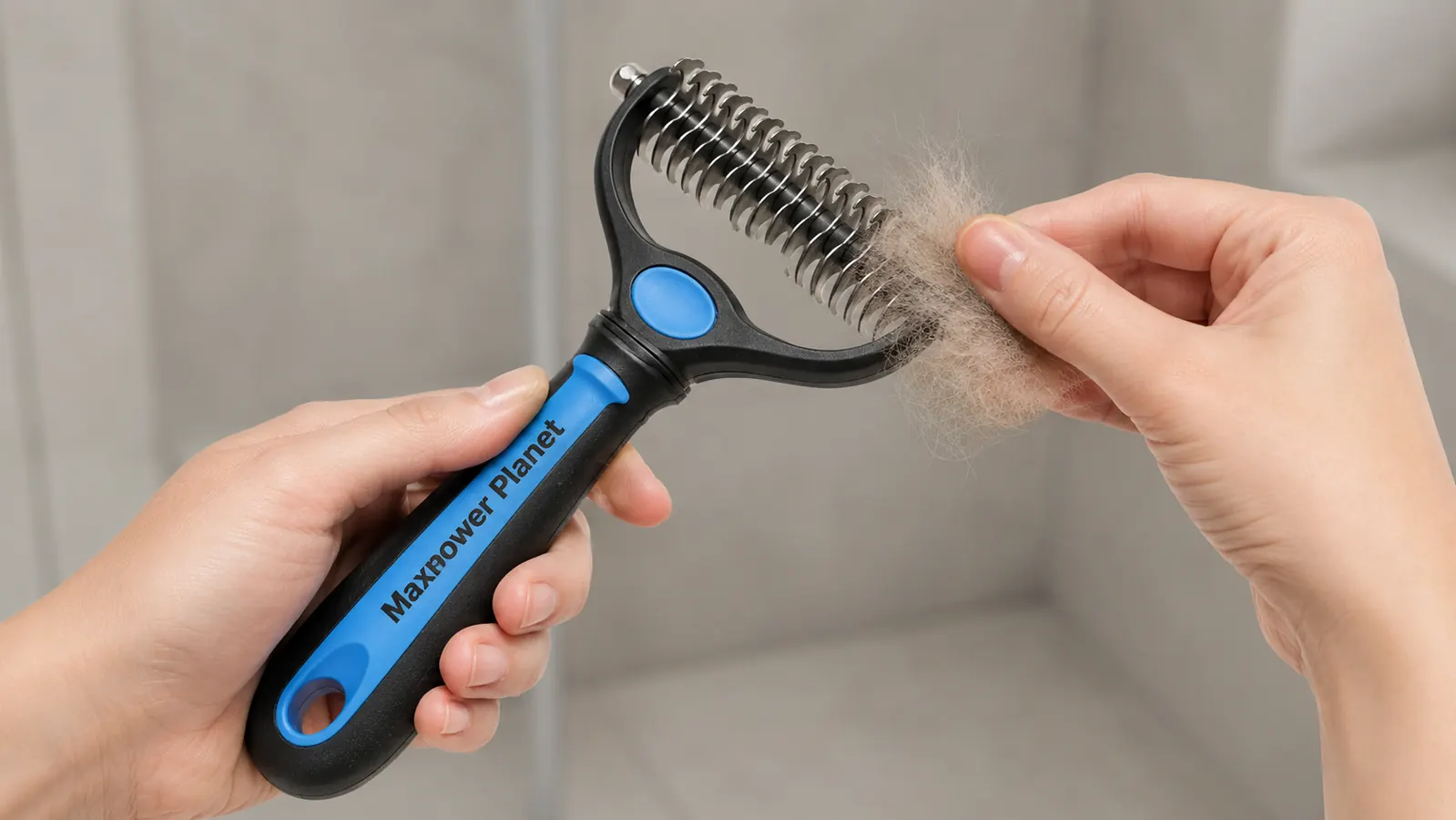
The Maxpower rake has two sides. The first side has 9 wide-spaced, rounded stainless steel tines designed to work through mats and tangles without snapping them. The second side has 17 finer, more closely-spaced tines for deshedding loose undercoat. We used both sides in every session, starting with the dematting side on his scruff and flanks, then switching to the deshedding side for his belly, chest, and tail.
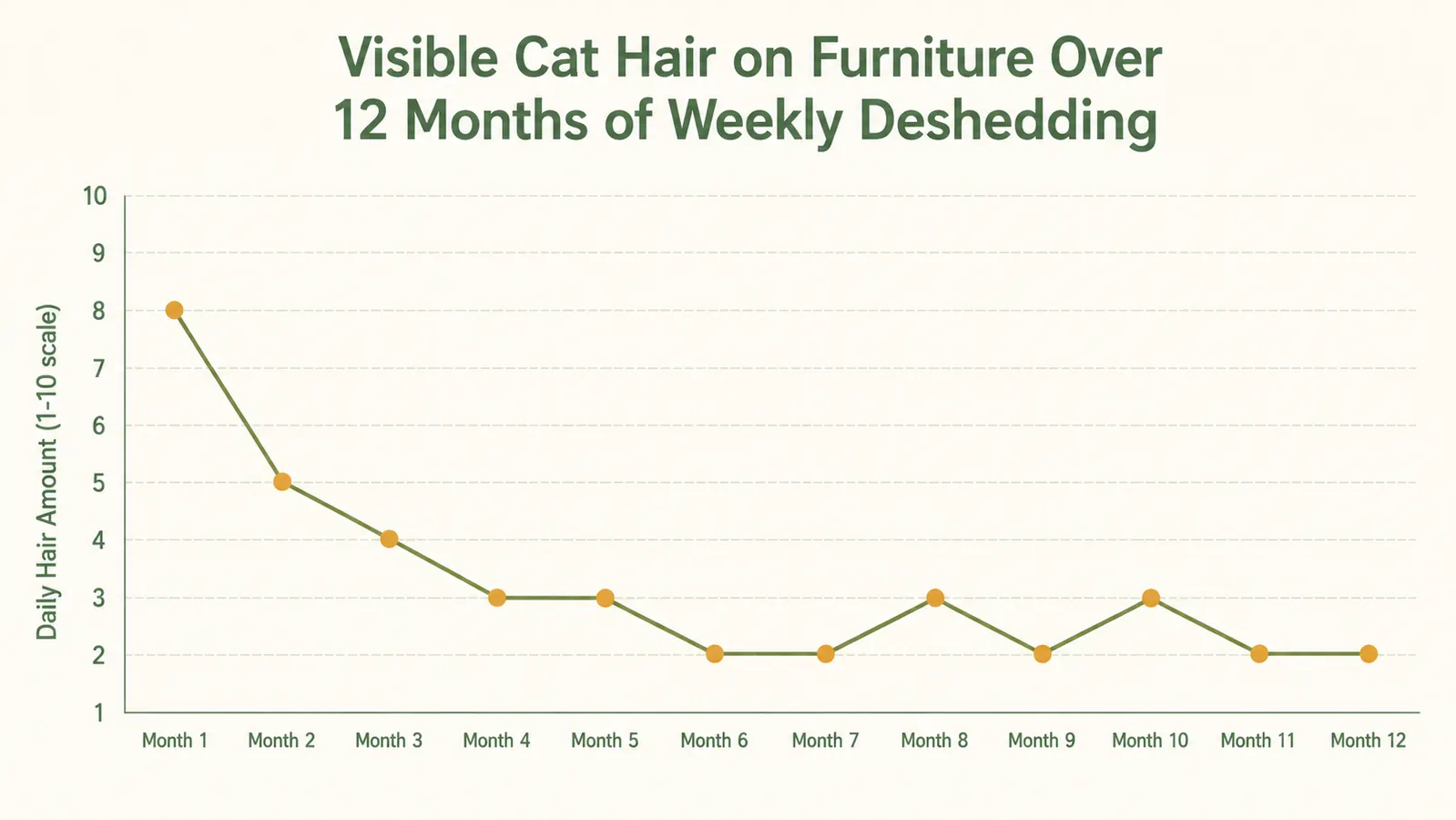
We tracked our sessions loosely over the six months. The first four weeks were the most dramatic in terms of fur volume. After that initial purge, weekly sessions pulled noticeably less each time, which is the sign of a tool actually working. By month three the amount coming off in a single session had leveled off to a consistent, manageable amount rather than the alarming fur clouds of early spring.
What the Dematting Side Actually Does
Maine Coons are prone to matting behind the ears, at the base of the tail, and under the armpits where the foreleg meets the chest. Those spots get ignored by most brushes because the fur is too dense to penetrate. The wide-tined dematting side of this rake is genuinely the most useful part of the tool for long-haired cats. The tines are curved slightly at the tip and spaced far enough apart that they slide into thick fur without immediately snagging. You can work through a mat gradually, holding the base of the fur with your free hand to reduce pull on the skin.
We did have one bad session in month two. We rushed through a particularly dense mat on Waffles's right flank and pulled instead of working slowly. He flinched and walked away, and he was reluctant to participate in the following Sunday's session. That was a user error, not a tool defect, but it is worth flagging: the dematting side has real grip, and it will cause discomfort if you try to force it through a tight mat instead of working the edges first. Once we corrected our technique, Waffles went back to sitting for full sessions.
What the Deshedding Side Does Over Time
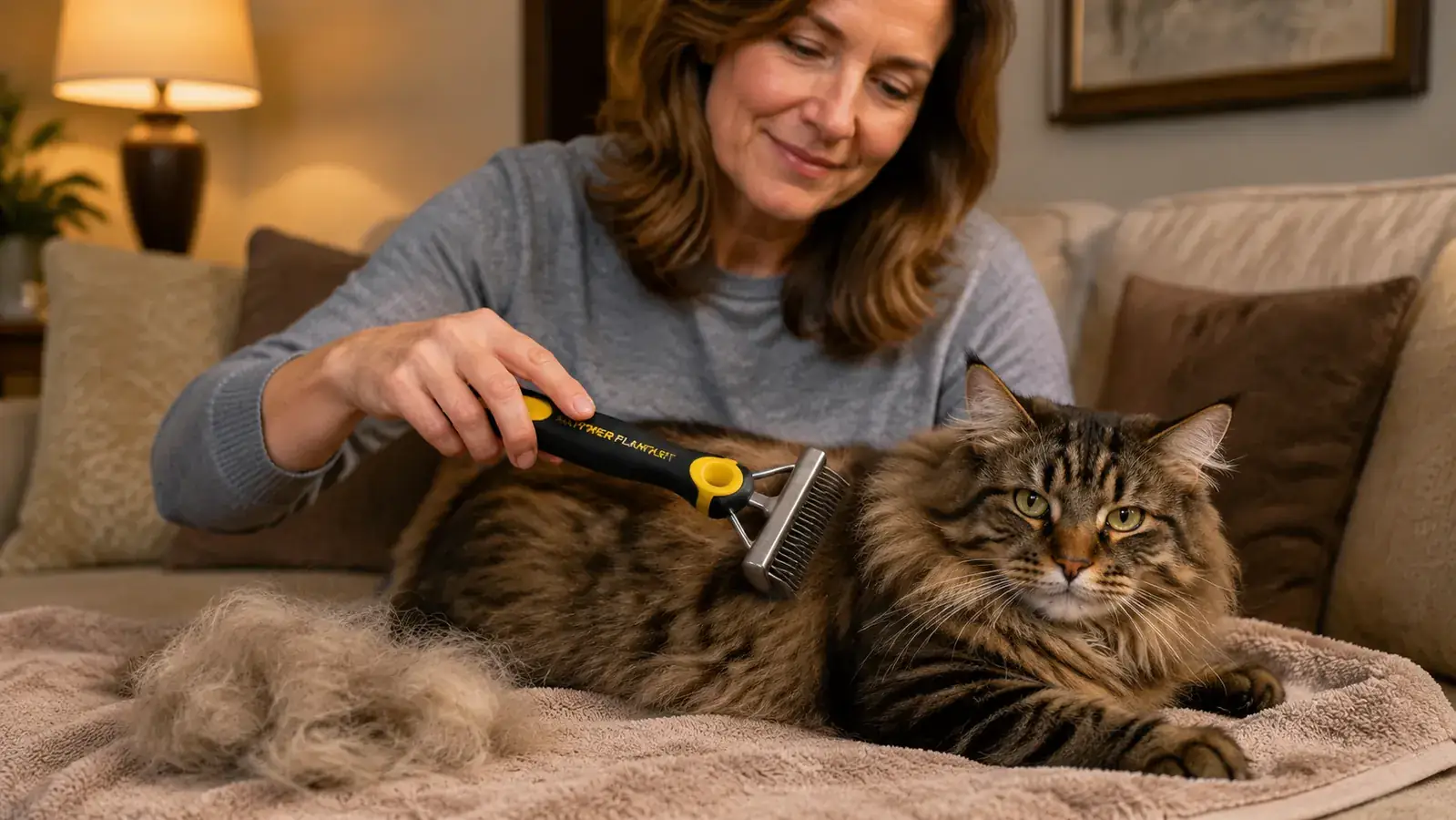
The 17-tine deshedding side is what most cat owners will reach for most often. It works best on already-detangled fur, so we always used it after the dematting pass. The tines are fine enough to grab loose undercoat without dragging at the top coat, which is the critical distinction. A tool that only drags the surface coat is cosmetically useless; the undercoat stays packed in and keeps shedding onto your couch.
After six months, the tines show zero bending or splaying. The stainless steel has held its spacing, which matters because a deshedding tool with bent tines stops working evenly. We ran it through the dishwasher twice (top rack, no heat dry) and it came out identical to how it started. The handle is rubberized plastic and has not cracked or softened with repeated washing.
The one ergonomic complaint we have is that the handle is short for a 14-pound cat. Working his full flank in a single pass requires repositioning your grip repeatedly. If your cat is on the smaller side, say under 10 pounds, this is probably not an issue. For large-breed cats like Maine Coons or Ragdolls, a longer handle would reduce hand fatigue in a longer session.
By month three, the fur on our couch dropped by roughly half. Not gone, but a visible, measurable change that our lint roller budget can confirm.
How It Compares to What We Used Before
Before the Maxpower rake, our main grooming tools were a standard slicker brush and a rubber grooming glove. The slicker brush is fine for surface coat and does a reasonable job distributing oils, but it cannot reach the undercoat on a cat as dense as Waffles. The rubber glove is great for short-haired cats but is effectively decorative on a Maine Coon. Neither tool was doing anything about the mats.
We also tried a stainless steel dematting comb with a single row of curved blades, the kind that is marketed as a cutting tool for heavy mats. That tool scared us because the blades are sharp enough to nick skin if the mat is right against the body. The Maxpower rake has no cutting blades. The tines are smooth-tipped and remove tangles by spreading and pulling rather than cutting, which makes it far more forgiving for an inexperienced groomer or a cat with sensitive skin.
We have not done a side-by-side comparison with the FURminator in our own household, but for a full breakdown of how the two tools differ on price, undercoat removal, and blade safety, we put together a dedicated piece on the Maxpower vs FURminator comparison. Short version: the price gap is significant, and for most cats the rake holds its own.
Impact on Shedding Around the House
This is the part that people actually care about. We did not run a controlled study, but we did track our lint roller usage loosely and we notice a real difference. During peak shedding season before we had the rake, we were going through a full lint roller roll in about two weeks. After three months of consistent weekly grooming with the Maxpower, that stretched to closer to five weeks. The fur on our couch, chairs, and dark clothing did not disappear, but it dropped to a level that stopped feeling like a losing battle.
The bigger win has been mat prevention. Waffles used to develop several small mats every couple of months that required either careful manual work or a trip to the groomer for a sanitary clip. In six months of weekly raking, we have had zero mats severe enough to require groomer intervention. That alone has more than paid back the purchase in grooming appointments avoided.
What Waffles Thinks of It
Cat tolerance matters as much as tool performance. A grooming tool that pulls hair or pokes skin will get used once and then sit in a drawer. After the early learning curve on the dematting side, Waffles settled into a pattern where he will sit for eight to ten minutes of consistent raking before he signals he is done by shifting position and tucking his paws under himself. That is actually longer than he tolerates a standard brush session. We think the wider tines feel more like the pressure of a firm petting stroke than the sharp sensation of a slicker brush.
We have spoken to a few other cat owners who have tried this rake. The consensus is that cats with thick, long coats tend to tolerate it better than short-haired cats, whose skin is less padded. If you have a shorthair, start gently with the deshedding side only and watch your cat's body language closely in the first few sessions.
What I Liked
- Double-sided design handles both dematting and deshedding in one tool, no swapping between products
- Stainless steel tines held their shape through six months of weekly use and multiple dishwasher runs
- Wide-spaced dematting tines work through dense Maine Coon fur without snagging when used correctly
- No cutting blades, making it significantly safer than bladed dematting combs for cats with skin close to a mat
- Price point is low enough to justify keeping one in the bathroom and one in the main grooming kit
- Most long-haired cats tolerate it better than slicker brushes after a brief adjustment period
Where It Falls Short
- The dematting side requires a careful, patient technique; rushing it through a tight mat causes discomfort
- Handle length is short for large breeds, leading to grip repositioning during longer sessions
- The fine deshedding tines clog quickly on a heavy-shedding cat and need clearing every two or three passes
- Ergonomics are functional but not premium; the handle has no thumb rest or contoured grip
- Not ideal for very short-haired cats where the tine spacing may be too wide to be effective
Who This Is For
The Maxpower Planet rake is the right tool if you have a medium to long-haired cat with a dense undercoat, the kind of coat that routinely develops mats and drops visible fur clumps on your furniture. Maine Coons, Ragdolls, Norwegian Forest Cats, Persians, and long-haired domestic mixes all fall into this category. If your cat is in that group and you are grooming at home without a professional rake-style tool, this is the most cost-effective upgrade you can make to your routine. It is also a reasonable choice for multi-cat households where you want one tool that can handle different coat types without buying a separate brush for each cat.
Who Should Skip It
If your cat has a short, single-layer coat, like a Siamese, Burmese, or most domestic shorthairs, this rake will not do much for you. The tine spacing is designed for dense, thick fur. A rubber grooming glove or a fine-toothed flea comb does a better job on thin, flat coats. You should also skip it if you are looking for a completely passive grooming experience. This tool requires active, careful use, especially around mats. If your cat is highly grooming-averse and your grooming sessions are already a physical negotiation, the dematting side in particular will require patience and a slow buildup of trust before it becomes part of a workable routine.
If your long-haired cat leaves fur on everything and you are tired of booking groomer appointments just to manage mats, the Maxpower rake is a practical fix at a price that makes sense.
Six months of weekly use on a 14-pound Maine Coon and it still performs the same as day one. Check the current price on Amazon and see the thousands of reviews from other cat owners.
Amazon Check Today's Price on Amazon →