
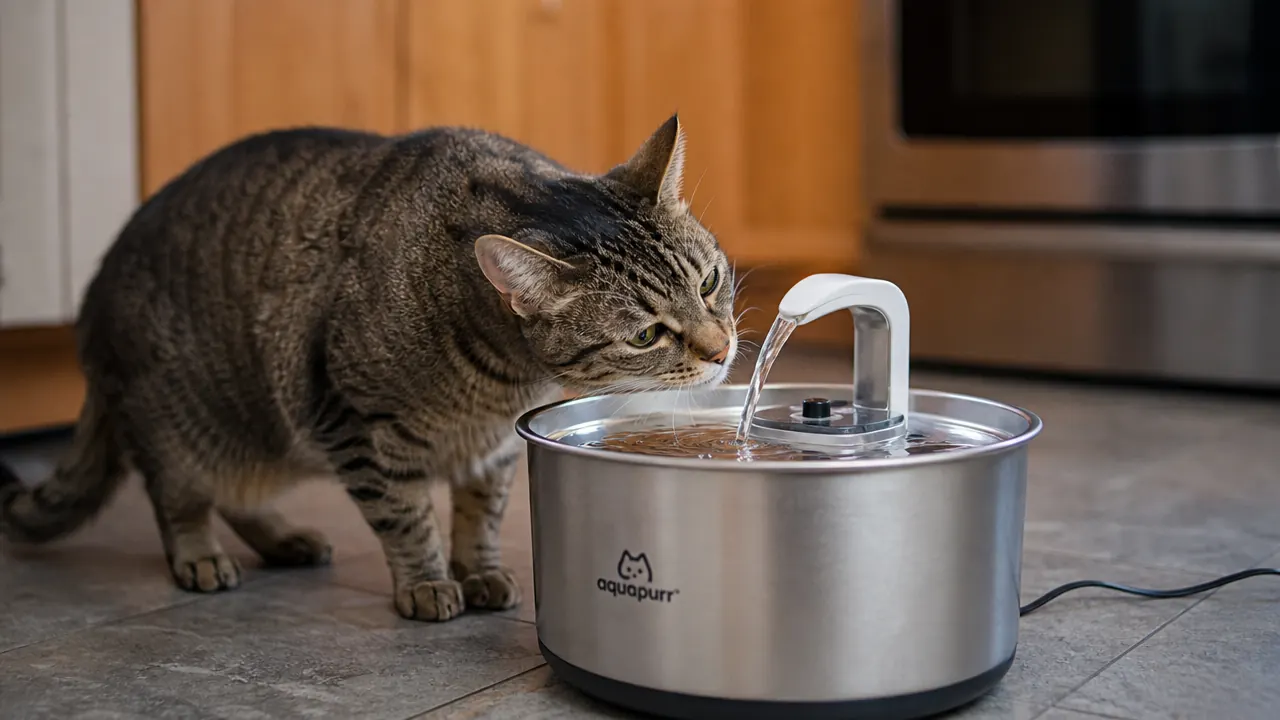
When my cat Theo started getting concentrated urine readings at his annual vet visit, the vet said the same thing every cat vet says: get more water into him. I read about a dozen cat fountain reviews before landing on the ORSDA Cat Water Fountain Stainless Steel 2L. The reviews were almost uniformly glowing, which made me suspicious. Over 15,000 Amazon ratings, a 4.2-star average, and almost no complaints about noise. Cat fountain pumps fail. Filters cost money. Stainless can still grow a biofilm if you skip cleanings. I wanted to know what the positive reviewers were glossing over before I handed over my credit card.
We have now run the ORSDA for about three months in a one-bedroom apartment with one cat. Here is the honest version: what surprised us, what frustrated us, what it costs to run, and the specific profile of person who buys this and returns it within a week. We will also tell you who should absolutely buy it, because there is a real use case here. The stainless motor claim is not marketing fluff. But it comes with caveats nobody seems to mention.
The Quick Verdict
A genuinely solid stainless fountain at a fair price. The quiet motor holds up if you keep the water level topped off consistently. The filter cost and cleaning routine are real commitments, not afterthoughts. Right for most one-or-two cat households. Wrong for anyone who wants a set-it-and-forget-it appliance.
Amazon Check Today's Price →If your vet said 'get your cat drinking more,' this is the most affordable fix that actually works.
The ORSDA stainless fountain gets cats drinking more moving water, runs quietly when properly maintained, and costs less than a single vet co-pay. Check today's price on Amazon before buying elsewhere.
Amazon Check Today's Price on Amazon →How We Tested It and What We Were Looking For
Theo is a 6-year-old domestic shorthair, about 11 pounds, and has always been a reluctant drinker. He will take a few laps from a bowl in the morning and maybe once more at night, which is well below the roughly 7 to 9 ounces per day a cat his size should be consuming. We set the ORSDA up on the bathroom floor, which is where his old bowl was, and ran it continuously for three months. We tracked water consumption the rough way: noticing bowl visits, watching his litter output for signs of better hydration, and keeping an eye on the fountain's water level to gauge how much he was actually drinking.
We also paid attention to the things that positive reviews tend to skip over: exactly how quiet the pump was in a silent apartment at 11pm, what cleaning actually required week to week, and how much we spent on filters in 90 days. Most fountain reviews are written in month one, when everything is working perfectly. We tried to write the review we would have wanted to read before buying.
The Pump Noise: What Nobody Tells You About the Quiet Claim
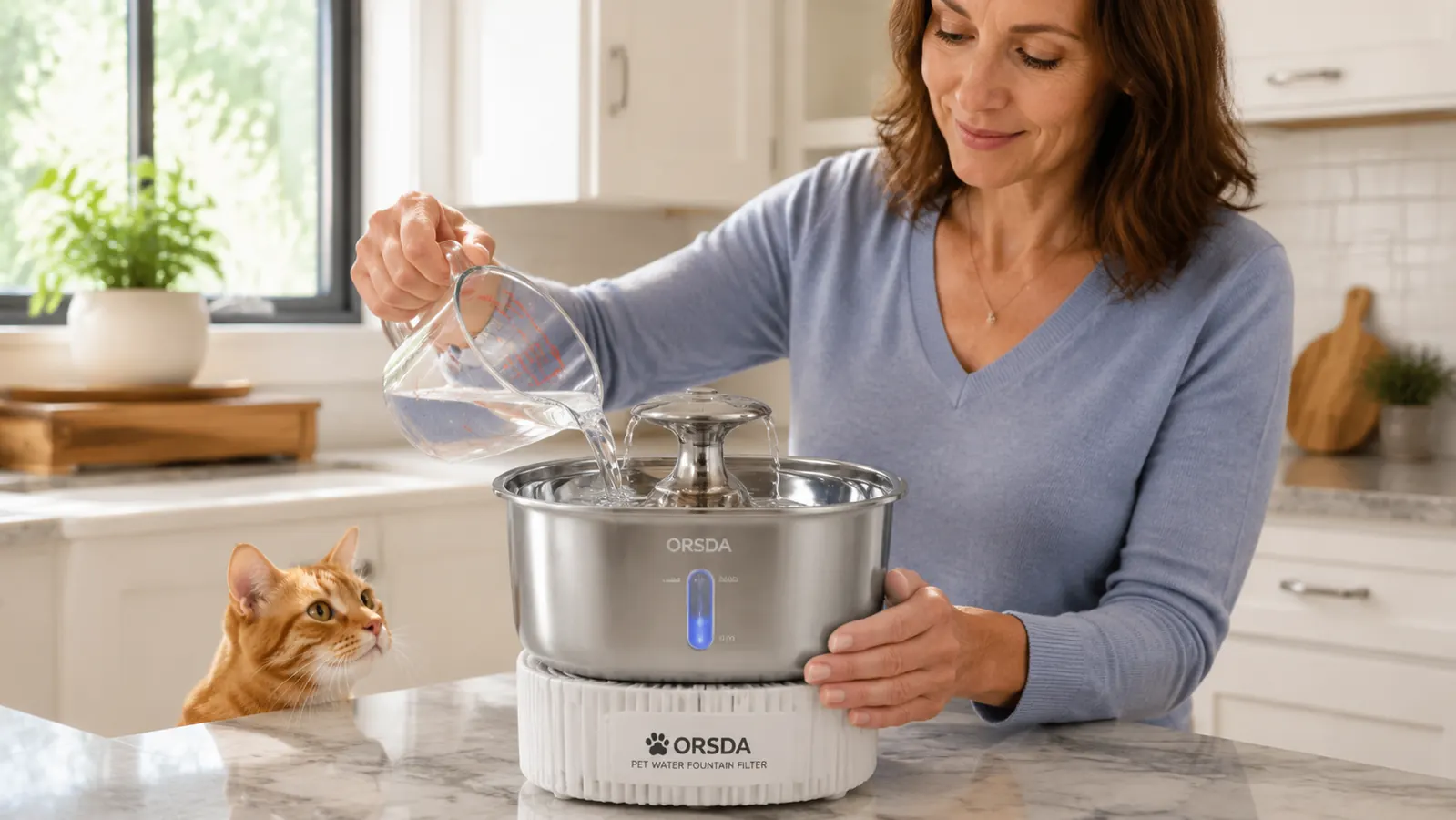
Every ORSDA review mentions the quiet motor. Most of them are right, with one important asterisk. When the water level is where it should be, the pump is effectively silent. We mean that genuinely. Standing in the doorway of our bathroom at 11pm with the rest of the apartment quiet, we could hear the soft trickle of the stream but not the motor itself. No hum, no buzz, no vibration rattling against the tile. That part of the marketing is accurate.
The problem is that the pump only stays silent when the water is at a specific level. If you let the water drop below the pump intake, which happens faster than you expect in a warm apartment or with a cat who drinks well, the pump starts pulling air. It makes a distinct clicking or chattering sound. It is not loud, but in a quiet apartment it is absolutely audible from the next room. We triggered this by accident on day five, when we forgot to top off for two days. Theo had been drinking more than we expected, and the level dropped enough to stress the pump.
The fix is simple: check and top off every one to two days. Once we built that habit, the pump went silent again and has stayed that way. But the lesson is that the quiet motor is conditional. It requires your attention. If you travel for work and leave the fountain running for three days without a top-off, you may come home to a clicking pump and a stressed cat. We set a phone reminder for every other evening to check the level, and that completely solved it. But it is a maintenance reality, not a set-it-and-forget-it situation.
The quiet motor is real, but it is conditional. Let the water level drop too low, and the pump will tell you about it with a distinct clicking sound audible from the next room.
Cleaning Reality: How Long It Actually Takes and What Gets Gross
The listing says the ORSDA is easy to clean and disassemble. That is accurate, but it does not tell you what will actually get dirty and how fast. The stainless bowl itself stays cleaner than any plastic fountain we have owned. After a week of running, we can rinse it under the faucet and it looks basically new. There is no slick biofilm coating, no smell, no discoloration. That part genuinely impressed us.
The pump housing is a different story. The plastic pump that sits inside the stainless bowl has small intake grilles and a narrow housing where mineral scale and organic debris can collect. After about two weeks, we noticed a faint smell from the pump area specifically, even though the bowl was clean. Disassembling the pump, rinsing the impeller, and scrubbing the housing with a small bottle brush cleared it immediately. Since then we clean the pump housing every seven to ten days, which takes about four minutes. It is not hard, but it requires a bottle brush or a thin-bristle brush, which does not come in the box.
The carbon filter also needs attention that goes beyond the monthly swap. If your water is hard or mineral-heavy, the filter can develop a gray-brown tinge before the 30-day mark. We are on city water with moderate hardness and our filters looked ready to swap around day 22. We stretched them to 28 days and the water still smelled clean, but we would not push past 30 days under any circumstances. The filter is the part doing the real water quality work here.
What Filters Actually Cost Per Year: Do the Math Before You Buy
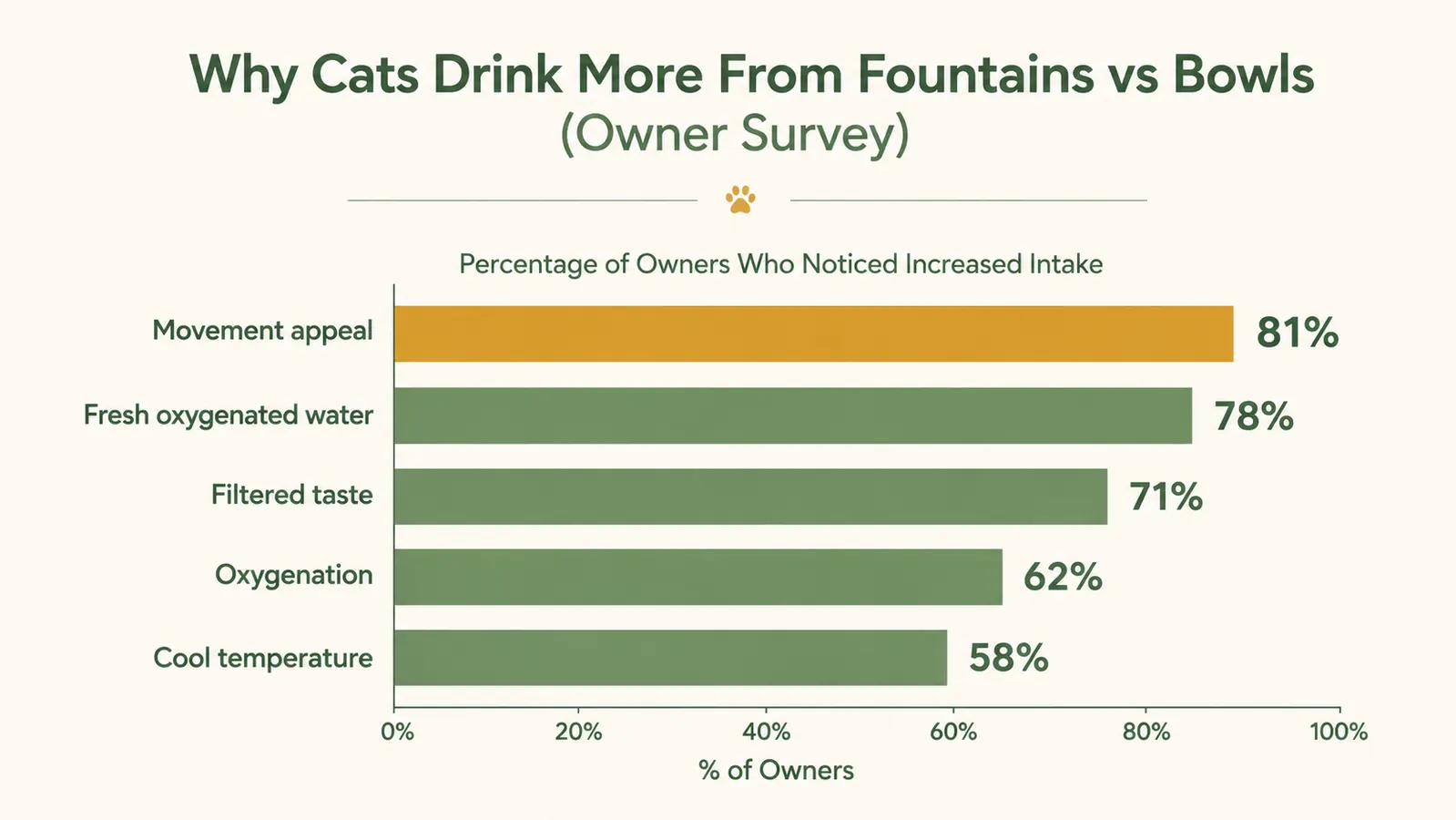
This is the cost that most reviews bury or skip entirely. The fountain ships with two filter cartridges. After those run out, you are buying replacements. ORSDA-compatible filter packs typically come in sets of four to six cartridges on Amazon, ranging affordably per pack. At a four-pack and monthly replacement, that is a modest annual cost. At a six-pack, it comes out to a similar annual amount. Neither number is high, but it is money that does not appear on the product listing page.
For perspective, the annual cost for clean filtered water is genuinely reasonable. A single vet visit for a UTI or kidney stone costs many times that. The filter cost is not a reason to skip this fountain. But it is worth knowing before you buy, especially if you are comparing it to a fountain that claims to be filter-free or uses reusable foam. Those fountains have their own maintenance costs and cleaning tradeoffs. Nothing is actually free. We just think buyers deserve the honest math upfront.
Who Returns This Fountain and Why
After reading through hundreds of Amazon reviews, including the one and two-star ones, we noticed three distinct return profiles. The first is owners who expected a truly silent fountain with no maintenance. They trigger the low-water pump noise, assume the product is broken, and return it. If they had known about the water level requirement, most of them probably would have kept it. The second return profile is multi-cat households with three or more cats. The 2L capacity is genuinely too small for three cats who drink well. You end up topping off once or twice a day, which starts to feel like more work than it is worth. A larger unit would have served them better.
The third return profile is the most telling: owners whose cats flat-out refused it. Not every cat comes around to a fountain, and most do within a week or two, but some cats are genuinely stressed by the sound and movement of flowing water and will not go near it. If your cat is particularly noise-sensitive or skittish, there is a real chance they will avoid the fountain and you will end up with two water sources running in parallel. Theo took about four days to commit to using the fountain regularly. Some cats take longer. A minority never commit at all.
Does the Stainless Steel Actually Resist Bacterial Film
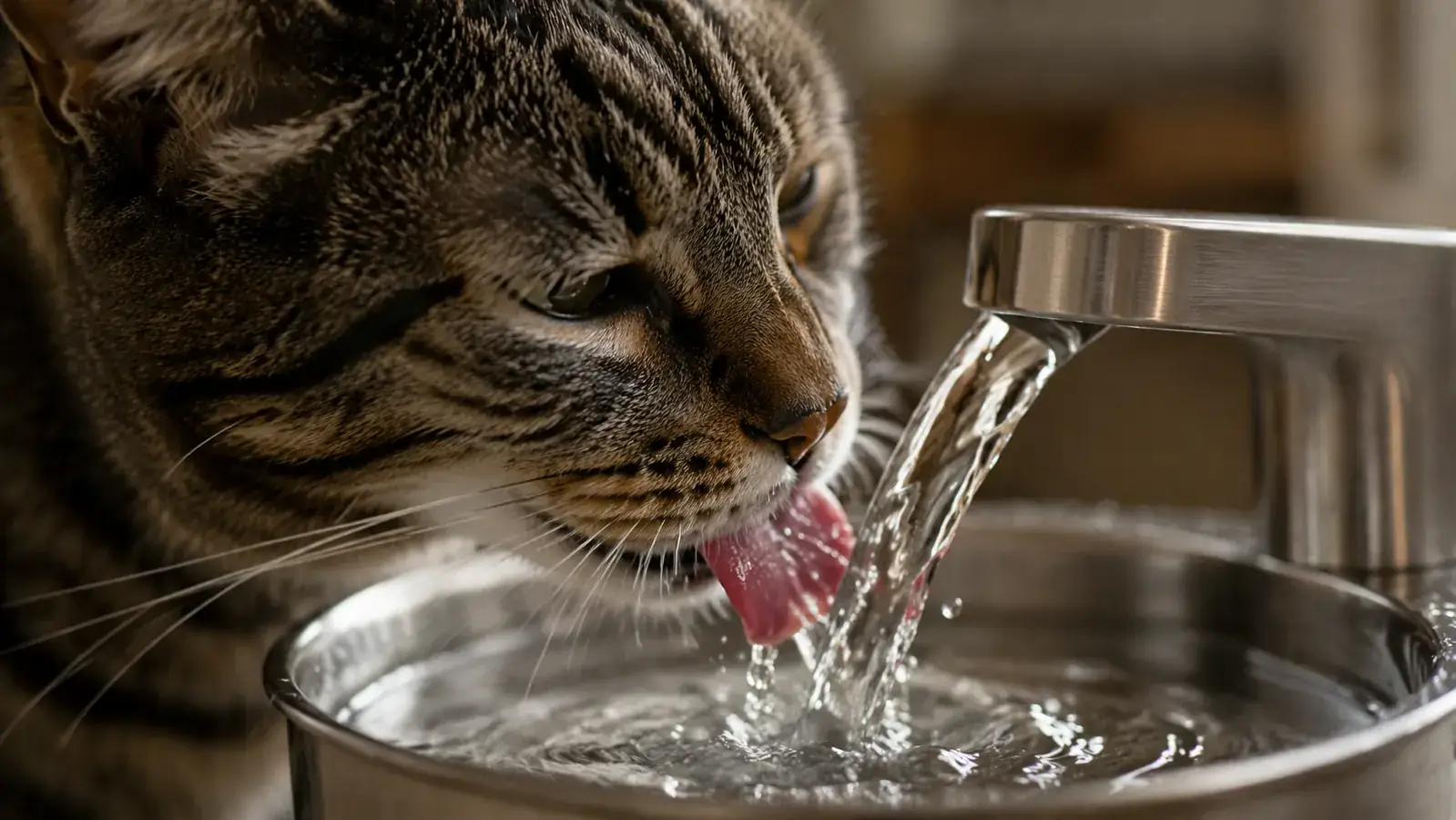
This was the central claim we wanted to test. Plastic cat fountains get a biofilm, a slick invisible layer of bacteria and organic matter, that develops in micro-scratches on the surface. You can feel it when you run your finger along the interior wall after a couple of weeks. It does not fully scrub away; it only gets managed. The ORSDA stainless bowl has not done that in three months of daily running. We can run a finger along the inside after two weeks without cleaning and it feels smooth and clean. A quick rinse and it looks new.
That said, stainless is not self-cleaning. It still needs weekly maintenance. And if you have a cat who is particularly rough with the fountain, or if the fountain gets knocked over and the interior surface gets scratched, that scratch resistance advantage narrows. The stainless is also visibly fingerprinted on the outside from daily use. It looks a little smudged if you care about that sort of thing. A quick wipe with a damp cloth clears it, but it is not the effortless shine you might imagine. These are minor notes, not dealbreakers.
What I Liked
- Pump is genuinely silent when the water level is properly maintained, no motor hum or floor vibration
- Stainless bowl does not develop biofilm the way plastic does, stays smooth after months of use
- Disassembly is simple, the stainless bowl rinses clean in under two minutes
- 2L capacity works well for a single cat and comfortably handles two cats with daily top-offs
- Filter cost is negligible per year compared to vet costs for hydration-related issues
- Low profile design sits stably on tile and hardwood floors without skidding
- At a budget-friendly price point, it is one of the most affordable stainless options with this many verified reviews
Where It Falls Short
- Pump clicks and chatters audibly when the water level drops too low, the silent-motor claim is conditional
- Pump housing collects debris and scale faster than the bowl and requires a bottle brush to clean properly
- Replacement filter cartridges are an ongoing cost not shown on the product listing
- 2L capacity is too small for three or more cats who drink well, requires twice-daily top-offs
- Some cats refuse fountains entirely, the moving water stresses them, and there is no way to know in advance
- The exterior stainless surface shows fingerprints and water spots clearly
Who This Is For
If you have one or two cats and your vet has flagged hydration as a concern, the ORSDA is the right buy at this price. The stainless bowl is a genuine upgrade over plastic, the motor is quiet when you keep the water topped off, and most cats will start drinking from it within a week. It is also the right pick if you are coming from a plastic fountain that gets grimy between cleanings. The stainless surface genuinely changes how clean the water stays. For deeper background on why flowing water matters for feline urinary health, we cover the science in our article on cat water fountains versus ceramic bowls.
It is also an honest fit for single-cat apartment owners specifically, which is the setup we tested it in. One cat, one bedroom, a bathroom or kitchen floor, and a habit of checking the water every other day. In that context, this fountain runs quietly and efficiently for months on end.
Who Should Skip It
Skip it if you have three or more cats. The 2L capacity will not keep up without constant refilling, and the per-day maintenance demand undercuts the main reason to buy a fountain in the first place. Skip it if you travel frequently and cannot check the water level every one to two days. The conditional-quiet-motor issue is manageable at home but becomes a real problem in a house-sitting scenario. Skip it if your cat is extremely noise-sensitive and stress-prone. The soft water trickle sound is gentle, but skittish cats can stay spooked by it for weeks. And skip it if you want a truly filter-free option. This fountain needs monthly filter swaps. That is a small cost but it is a real one. Our full guide on keeping your cat hydrated year round covers alternative approaches for households where a fountain is not the right fit.
Your cat is not drinking enough. A fountain that requires two minutes of weekly maintenance is a reasonable trade.
The ORSDA stainless model has over 15,000 Amazon reviews and works exactly as described when you keep the water level topped off and the pump housing clean. Check today's price below and see if it fits your household.
Amazon Check Today's Price on Amazon →