
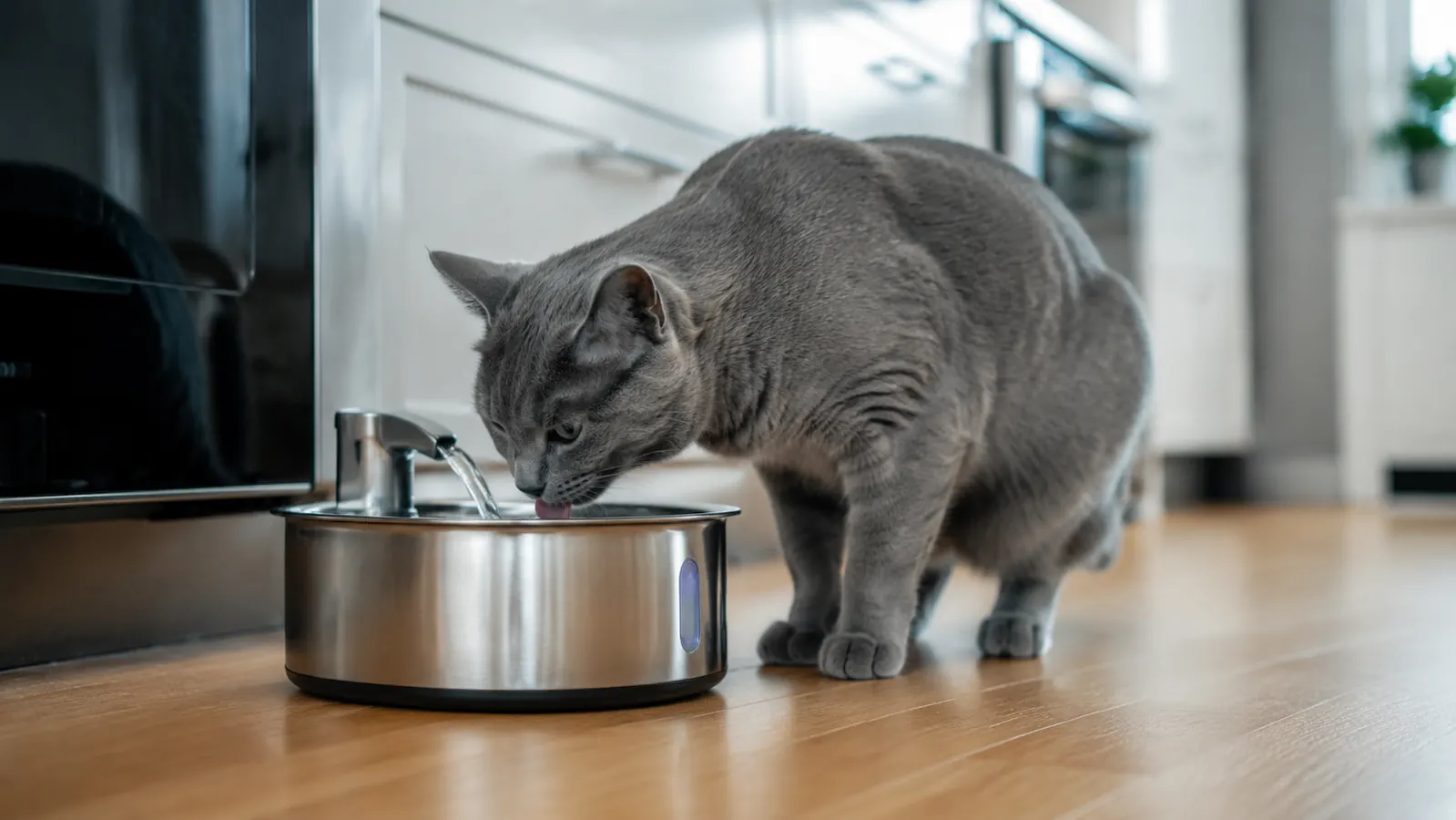
We have been in enough cat households to know the pattern: the water bowl sits full, the cat yowls at the faucet, and the owner wonders why their cat treats drinking like an obstacle course. It is not stubbornness. Cats evolved as desert hunters who instinctively distrust standing water, and that instinct is alive and well in every indoor cat alive today. The fix is surprisingly simple, and the ORSDA Cat Water Fountain (2L, stainless steel) is the one we keep coming back to. Here are 10 reasons flowing water is not a luxury for cats. It is closer to a health requirement.
Your Cat Is Probably Chronically Dehydrated. This Is the Easiest Fix.
The ORSDA stainless steel fountain runs whisper-quiet, filters continuously, and holds 2 liters so you are not refilling it twice a day. Over 15,000 reviewers, 4.2 stars. Check today's price on Amazon.
Amazon Check Today's Price on Amazon →Cats Are Hardwired to Distrust Still Water
In the wild, standing water is where bacteria and parasites breed. Moving water means a freshwater source. That instinct did not disappear when cats moved indoors. When your cat ignores a full bowl and waits at the faucet instead, she is not being difficult. She is following millions of years of survival programming. A fountain mimics the moving water signal that tells her it is safe to drink. The ORSDA fountain's gentle flow arc is enough to trigger that response reliably, even in cats who have ignored bowls for years.
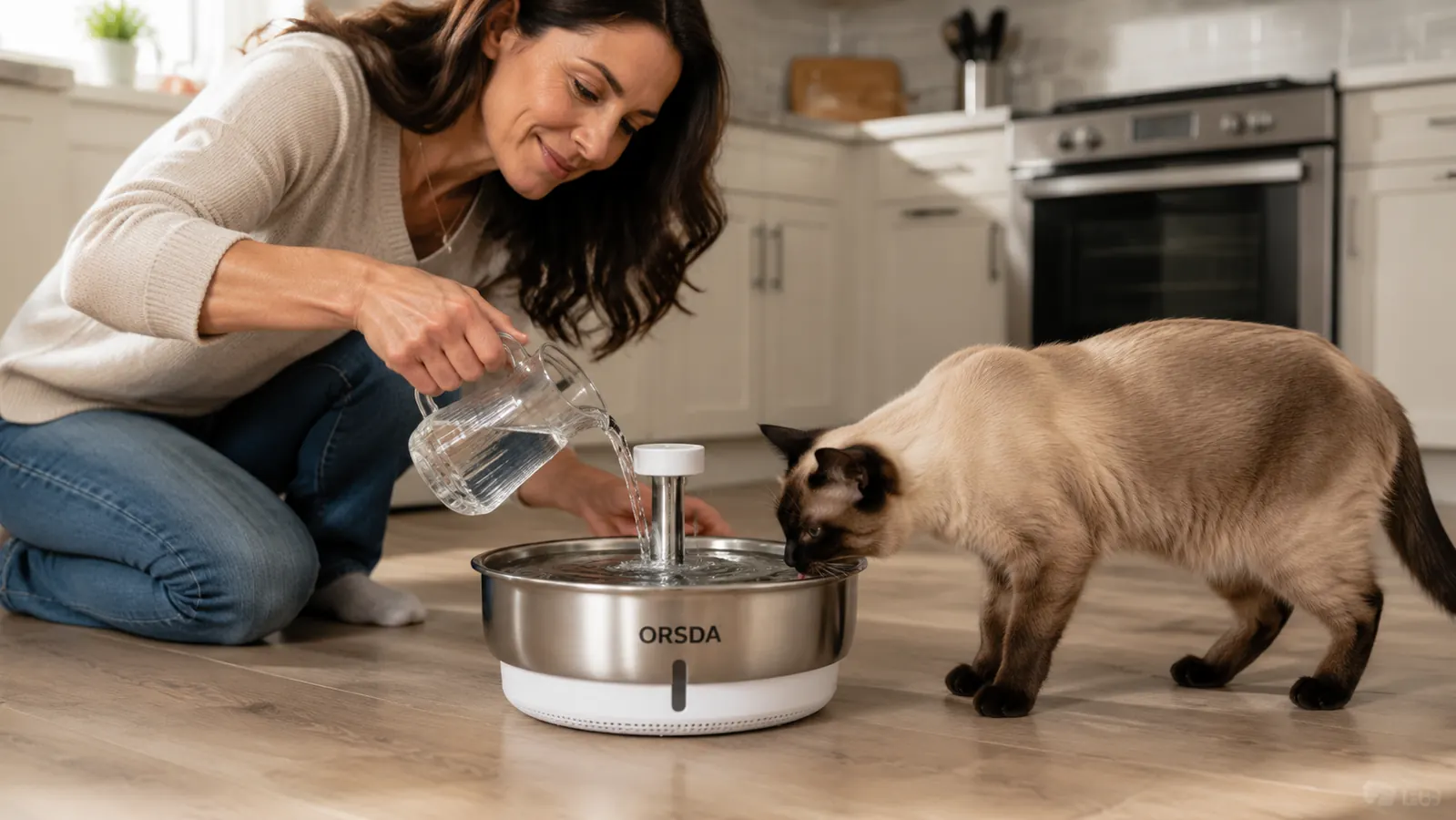
Chronic Dehydration Is the Leading Driver of Feline Kidney Disease
Feline chronic kidney disease (CKD) affects roughly 30 to 40 percent of cats over age 10, and low water intake is one of the primary contributing factors. Cats on dry food diets especially struggle because they do not compensate naturally by drinking more. Getting your cat to drink consistently throughout the day, not just in one gulp at the bowl, is one of the most actionable things you can do for long-term kidney health. A running fountain raises daily intake without any effort on the cat's part. We have seen cats more than double their daily water intake within two weeks of switching to a fountain.
Flowing Water Stays Oxygenated and Tastes Better
Still water goes flat. Dissolved oxygen depletes, minerals concentrate, and the taste shifts in ways cats notice before we do. A cat's sense of smell is roughly 14 times stronger than ours, so a bowl that sat out all day smells like a chemistry experiment to them. The continuous circulation in a fountain keeps the water oxygenated and fresher-tasting throughout the day. Add a carbon filter like the one included with the ORSDA and you also pull out chlorine, hair, and sediment before it reaches your cat's tongue.
Fountains Reduce the Frequency of Urinary Tract Infections
Urinary tract infections (UTIs) and feline idiopathic cystitis (FIC) are painful, expensive, and directly linked to low fluid intake and concentrated urine. When a cat drinks more, their urine dilutes and flushes the urinary tract more frequently. For cats who have had a UTI before, the risk of recurrence drops meaningfully when daily water intake goes up. A fountain is not a substitute for vet care, but it is one of the cheapest, most consistent preventive steps available. See our <a href="/orsda-cat-fountain-review-long-term">long-term ORSDA review</a> for data on how intake shifts after the switch.
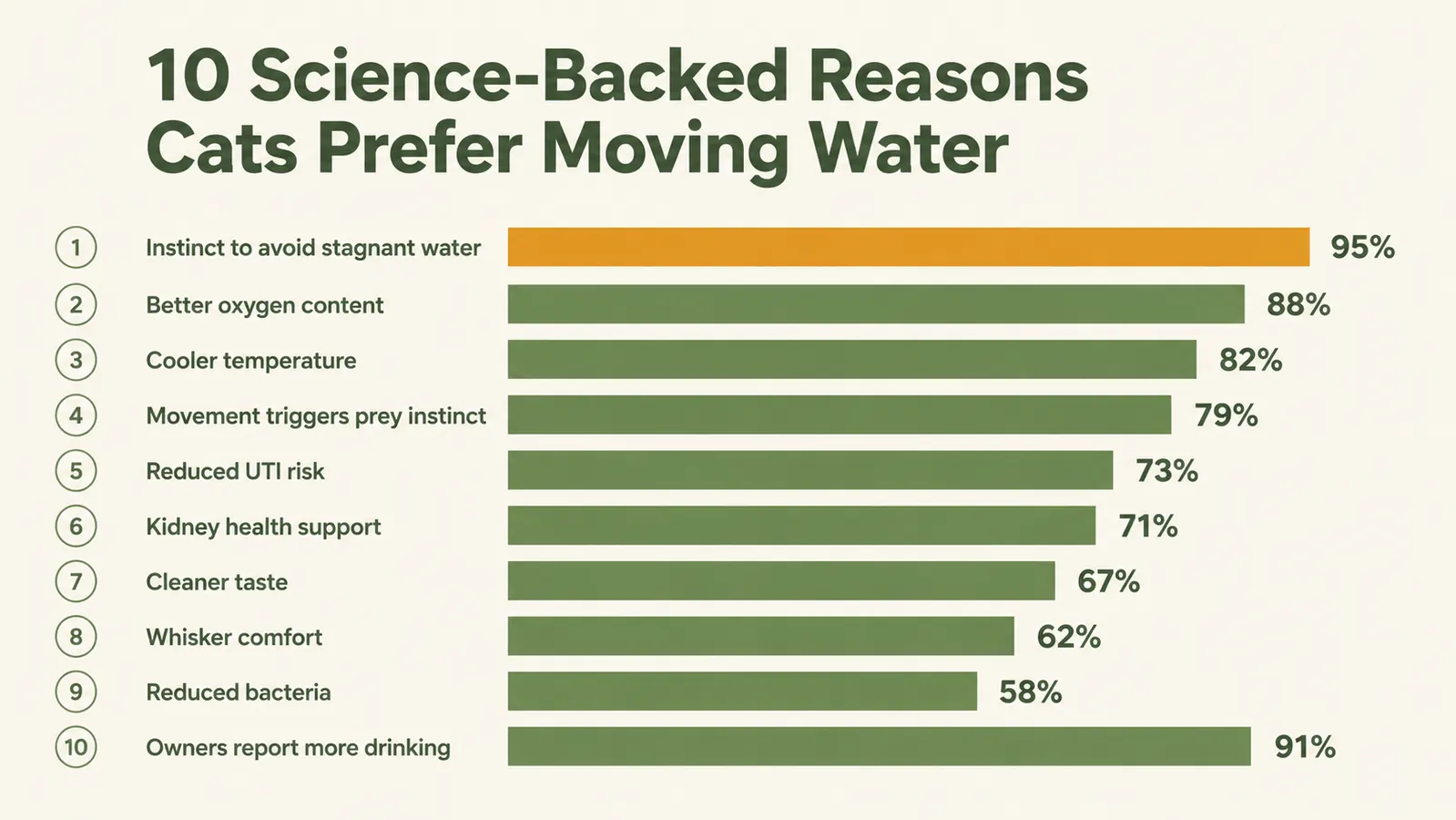
Stainless Steel Prevents Bacterial Biofilm Buildup
Plastic water bowls develop biofilm within days. Biofilm is the slimy coating you feel on a bowl that has not been scrubbed, and it is a colony of bacteria your cat is drinking from at every visit. Ceramic is better, but chips and crazes in glaze trap bacteria too. Stainless steel is non-porous, resists biofilm, and is easy to sanitize in a dishwasher. The ORSDA fountain's stainless steel bowl and lid are the reason we recommend it over plastic fountain options. The plastic housing of the pump stays separate from the water contact surface, which is the part that matters.
Cats With Whisker Fatigue Drink More From Fountains
Whisker fatigue is real and underdiagnosed. When a bowl is too narrow or too deep, a cat's whiskers brush the sides on every approach and the sensory overload causes them to eat and drink less, or paw food out of the bowl entirely. Fountain designs with wide, shallow basins solve this without any retraining. The ORSDA's wide stainless bowl gives a cat room to approach from any angle without whisker contact. If your cat eats from the edge of a plate or dips a paw in the water before drinking, whisker fatigue is probably part of the story.
Multi-Cat Households Need More Water Access Points
Cats are not pack animals. They do not naturally share resources without social friction, and water bowls are no exception. In a home with two or more cats, one cat often guards the bowl without the owner noticing, leaving the other cat chronically underhydrated. Placing one fountain in the kitchen and one in a secondary room eliminates this. The ORSDA is priced low enough that running two is practical. We have seen submissive cats nearly triple their water intake once they had their own unguarded source.
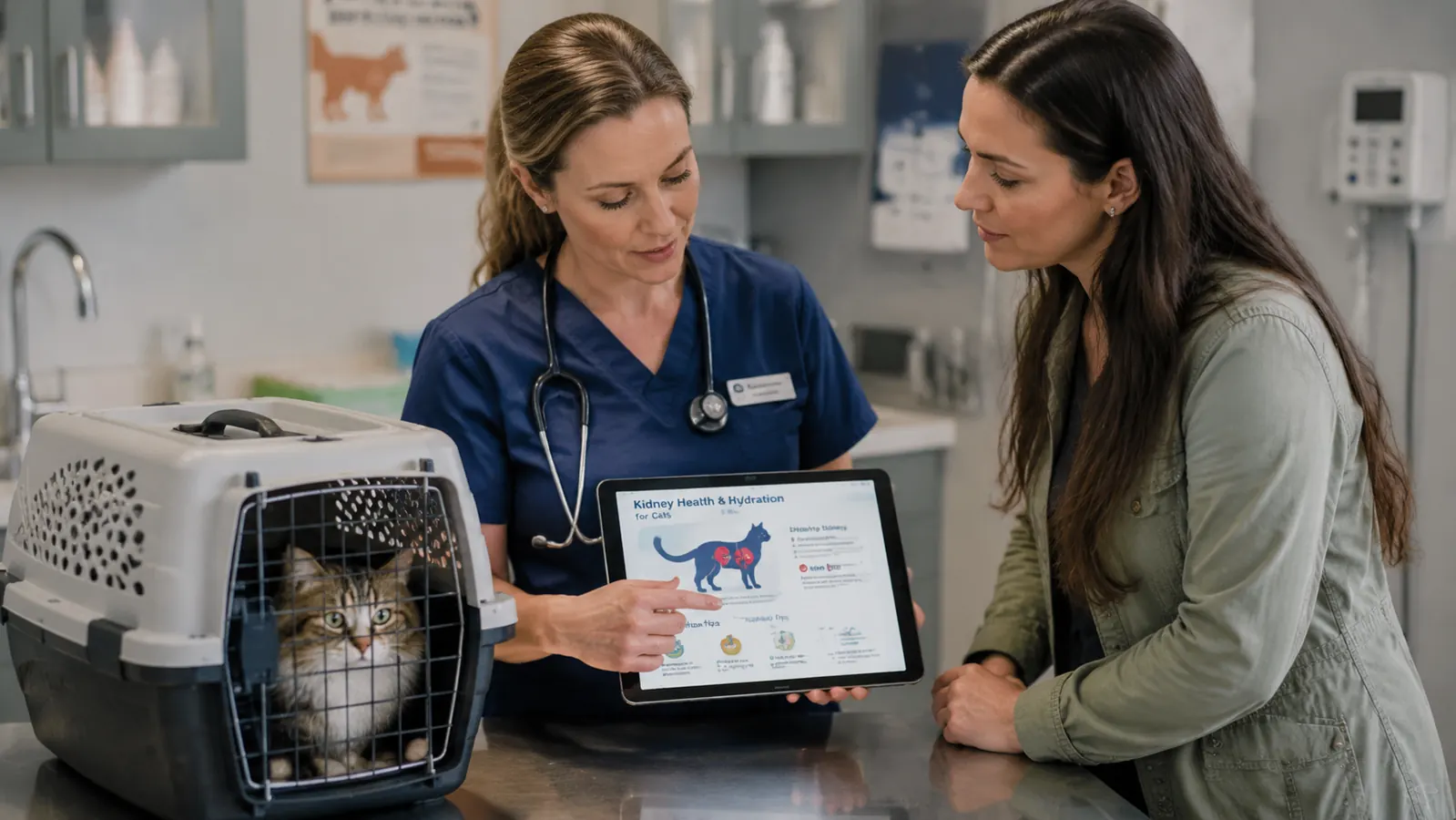
A Quiet Motor Means Your Cat Will Actually Use It
Some fountains sound like a small aquarium pump running in a library. Cats are sound-sensitive, and a fountain that produces a mechanical whirr or gurgle near the bowl is a fountain many cats avoid entirely. The ORSDA uses a low-RPM pump that measures below 35 decibels at the water surface, roughly the level of a quiet library. We have run it overnight in a bedroom without it being a problem. If your cat spooked at a previous fountain, noise was probably the reason. The <a href="/orsda-cat-fountain-honest-review">honest review</a> covers the motor noise at 2am specifically.
Fountains Reduce How Often You Refill and Forget
A standard cat bowl holds 8 to 12 ounces. In a warm house or with a particularly thirsty cat, it can go empty by afternoon without you noticing. An empty bowl means a dehydrated cat. The ORSDA holds 2 liters, roughly 67 ounces, and the visible water level is easy to check at a glance. Most owners find they refill it every two to three days rather than once or twice daily. That one change removes the single most common cause of unintentional feline dehydration: forgetting.
The Cost Per Month Is Lower Than One Vet Co-Pay
A single vet visit for a feline UTI or early-stage kidney concerns typically runs in the mid-to-upper range after diagnostics. The ORSDA fountain costs roughly the same as two large bags of cat food and uses about as much electricity as an LED night-light. Replacement filters run a few dollars each and last four to six weeks. The math on prevention versus treatment is not close. For the cats most at risk, specifically indoor males on dry food and older cats over seven, a fountain is the single highest-return health purchase in their daily environment.
What We Would Skip
Plastic fountains with no filter and no stainless contact surface are not worth the shelf space. They biofilm quickly, the taste degrades within days, and many cats stop using them by the second week. We have also tried gravity-fed water dispensers that hold a gallon jug. They hold a lot of water, but the reservoir is sealed from light and air, so the water at the bottom can develop an off taste by the time the cat reaches it. If you are going to invest in better hydration for your cat, skip the plastic and skip the gravity jugs. A properly designed fountain with a real filter and non-porous contact surfaces is the only format that consistently produces higher daily intake.
The bowl sits full. The cat yowls at the faucet. That is not a personality quirk. That is a cat telling you exactly what she needs.
Ready to Stop Refilling the Bowl Twice a Day?
The ORSDA stainless steel cat fountain is quiet, easy to clean, and holds enough water that most owners refill it every two to three days. More than 15,000 reviewers and a 4.2-star rating. Check the current price before it moves.
Amazon Check Today's Price on Amazon →