
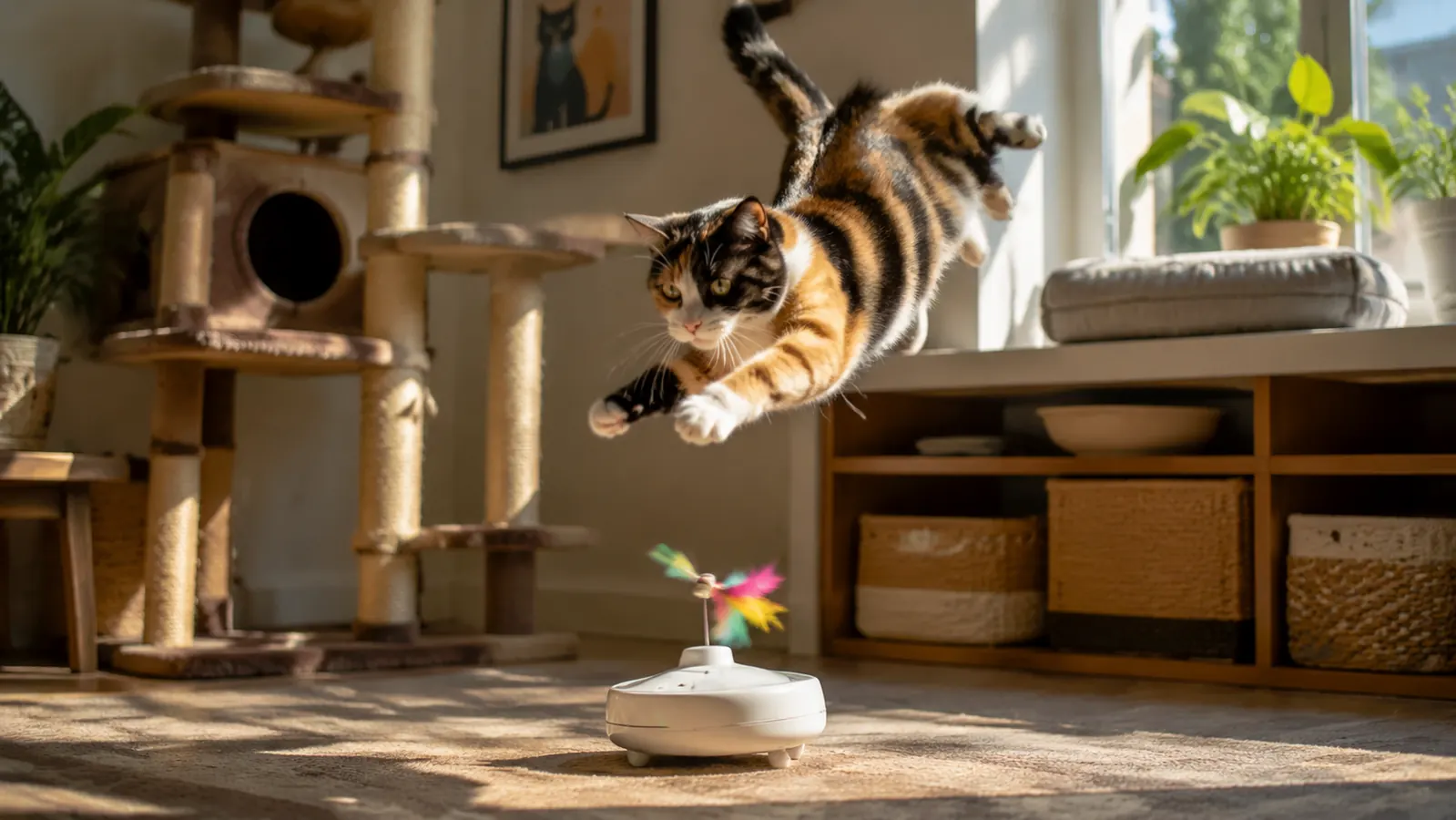
If you come home to knocked-over water glasses, shredded couch corners, or a cat who screams at you from the moment you walk in, you are not dealing with a bad cat. You are dealing with a bored one. Indoor cats live without the hunting circuits, territorial roaming, and environmental novelty that their outdoor counterparts get automatically. That gap creates real behavioral problems: anxiety, destructive scratching, weight gain, and the 3am zoomies that nobody asked for.
We have spent time working through this problem across different cat personalities, from lazy seven-year-old tabbies to relentlessly curious kittens, and the solution is always a combination of environment setup and scheduled stimulation. The Potaroma 3-in-1 interactive cat toy (ASIN B0BX9KXKPH) is the single tool we come back to most consistently for solo play during the workday, but the toy alone is not enough. Here is the full five-step system.
If your cat is tearing the house apart while you are at work, this is the toy that changes that.
The Potaroma 3-in-1 runs on a built-in rechargeable battery, cycles through butterfly, hide-and-seek, and feather modes automatically, and shuts off on its own so your cat does not burn out. Rated 4.6 stars from over 7,000 cat owners.
Amazon Check Today's Price on Amazon →Step 1: Audit Your Cat's Current Environment for Dead Zones
Before adding anything new, walk through your home at cat height. Look for the spaces where your cat spends most of the day and ask one question: is there anything to do here? Most living rooms are dead zones for cats. A flat couch, a coffee table, maybe a window that faces a brick wall. There is no elevation, no visual stimulation, nothing that engages a cat's hardwired need to survey territory from height and track movement.
The fix does not require a major renovation. A cat tree placed at a window with outdoor activity (bird feeder, busy street, even a hanging wind chime) gives your cat something to watch for hours. Add a tall scratching post near the area where they scratch furniture now, and you redirect rather than punish. Look for at least two vertical zones in any room your cat frequents. One near a window, one near their feeding area. That baseline gives them the environmental richness they need before you layer in toys.
A window bird feeder costs about eight dollars and takes five minutes to install. For a cat stuck indoors all day, it is genuinely enriching television. If you live in an apartment with no outdoor view worth watching, consider a cat-safe indoor plant with interesting textures (silver vine or valerian both trigger a mild euphoric response in cats) or a fish tank placed where they can observe it safely. The point is to turn dead space into active observation space.
Step 2: Schedule Two Short Play Sessions Before You Leave and After You Return
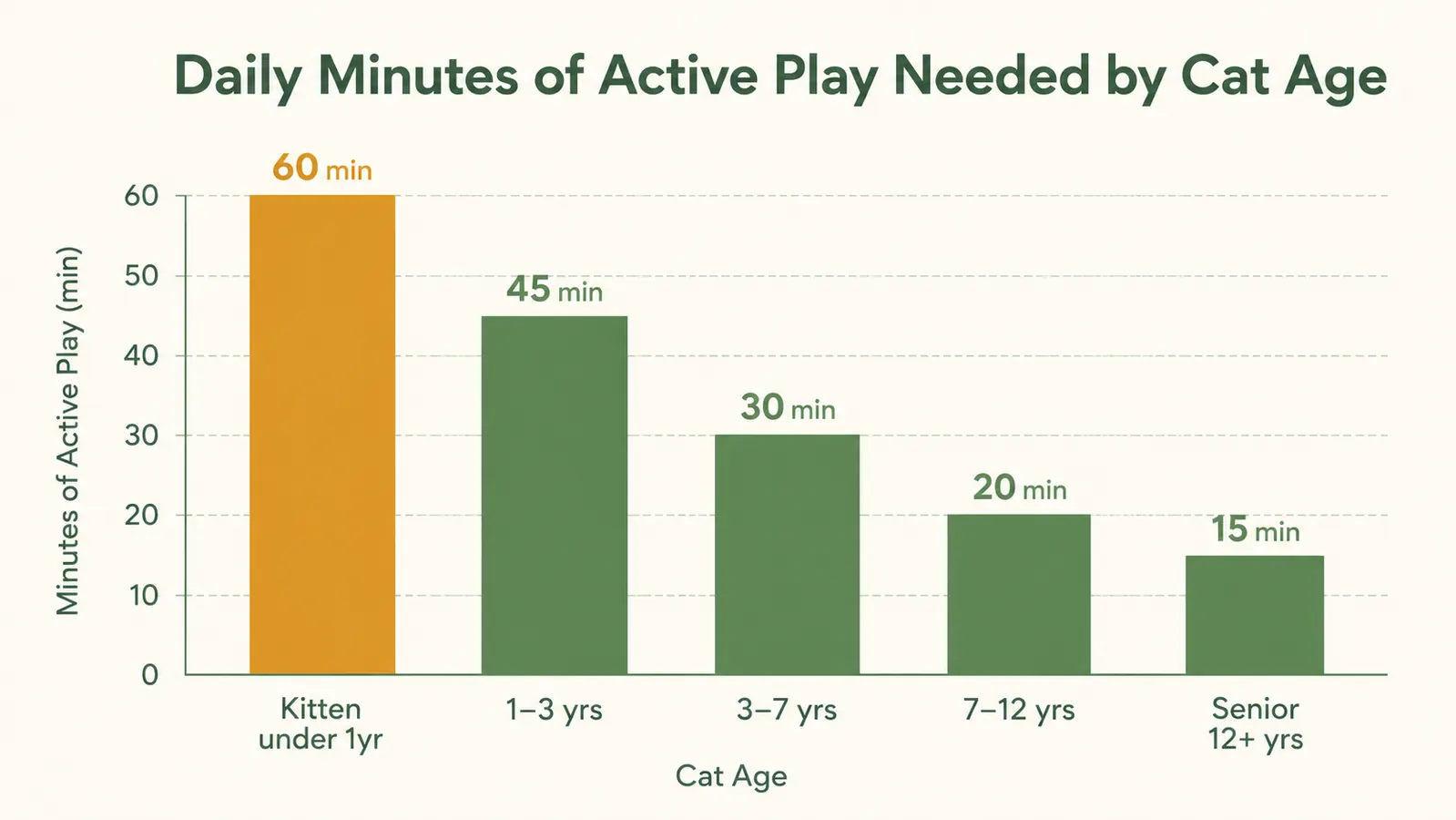
Cats are crepuscular, meaning their activity peaks around dawn and dusk. If you are leaving for work in the morning and returning in the evening, those windows align almost perfectly with when your cat most wants to move. A ten-to-fifteen-minute wand toy session before you leave burns off the morning burst and reduces the likelihood that your cat will spend the day pacing or vocalizing out of frustration. An evening session after dinner mirrors the dusk hunt cycle and helps them settle into a calm night.
The key is making these sessions consistent, not long. Cats respond to predictable routines more than marathon play days. If you play hard for an hour on Saturday but do nothing Monday through Friday, your cat stays chronically under-stimulated during the week. Fifteen focused minutes, twice a day, at roughly the same time, builds anticipation and gives your cat behavioral anchors across the day. After the evening session, offer a small food reward or a puzzle feeder. The hunt, catch, eat, groom, sleep sequence is the natural end to a cat's activity cycle and letting them complete it reduces nighttime restlessness.
Step 3: Deploy an Automatic Interactive Toy for Solo Midday Play
The gap between morning and evening is where most indoor cats struggle. You are at work, no one is home, and the cat has nothing triggering its hunt instinct. Leaving a static toy on the floor does not help. A ball that does not move is not prey. What works is a toy with autonomous movement, something that changes direction, appears and disappears, or cycles through modes without your cat being able to fully predict it.
The Potaroma 3-in-1 is the tool we use for exactly this. It runs three modes: a butterfly feather that flutters in erratic patterns, a hide-and-seek function where the feather retreats under the base and re-emerges unpredictably, and a dual feather wand that rotates. The USB-C rechargeable battery holds a charge through several play sessions, and the auto-shutoff prevents your cat from habituating to it by overexposure. We have used it with a six-year-old indoor-only tabby named Nori who had previously rejected every toy we bought, and within the first session she was actively hunting it, not just swatting at it passively.
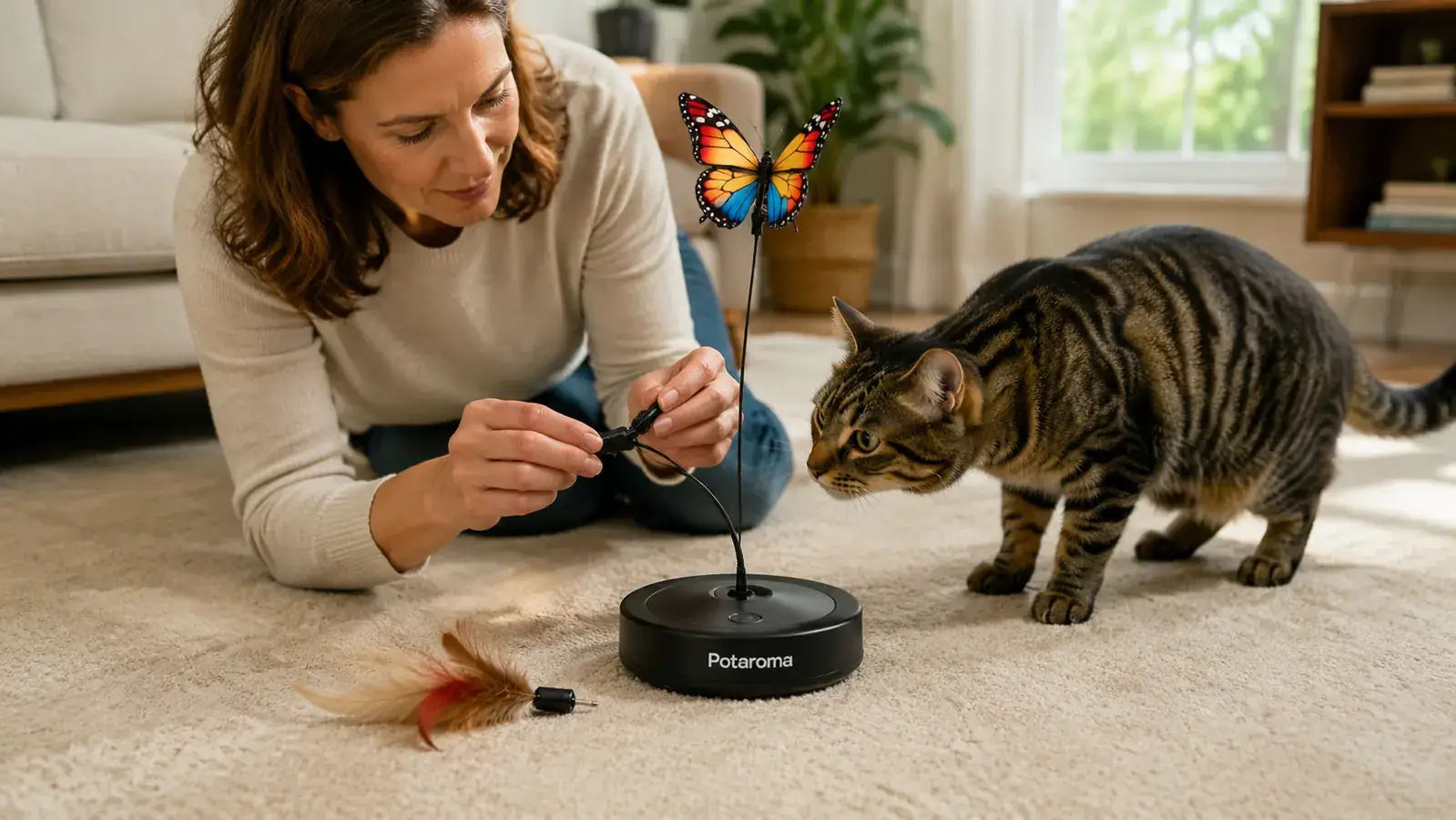
Place the toy on a hard surface away from walls, so your cat has room to circle and approach from different angles. Carpet works too but the base tracks more freely on hardwood or tile. If you have a multi-cat household, introduce the toy when the cats are calm and supervised at first. The hide-and-seek mode in particular can create minor resource guarding in cats who are already tense with each other, so watch the first few sessions before leaving them to it unsupervised.
A toy with unpredictable movement is not a luxury for an indoor cat. It is the closest thing to real prey behavior that happens inside four walls.
Step 4: Add Environmental Rotation to Prevent Habituation
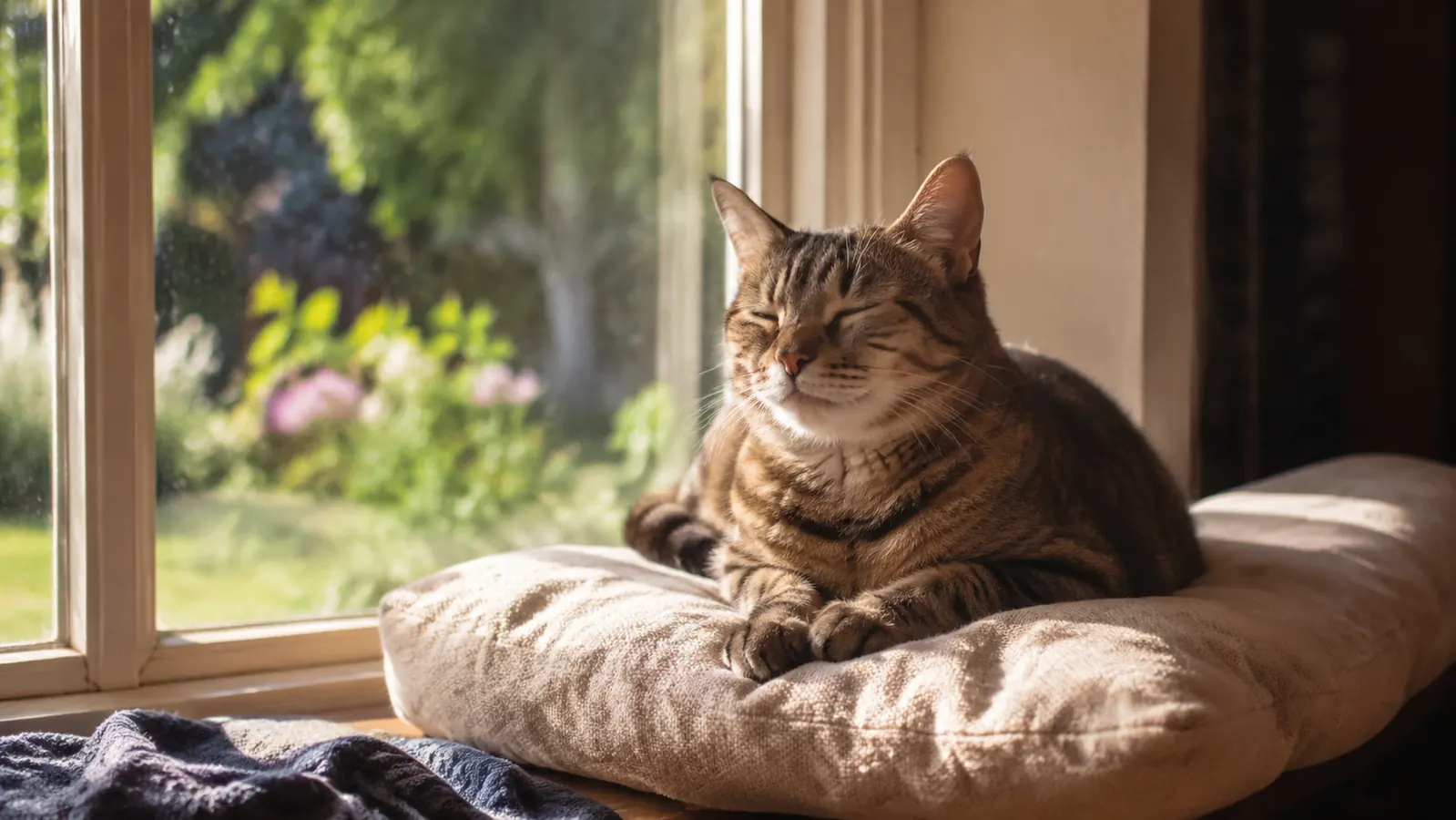
Even the best toy stops working if it is always available. Cats are novelty-sensitive predators. The same object in the same place every day becomes furniture, not prey. The most effective enrichment programs rotate toys on a weekly or biweekly basis, putting some in a drawer and swapping in others so each toy feels new when it reappears. We keep a small bin of four to six toys and cycle two or three out each week. The Potaroma toy stays in rotation year-round because the unpredictable movement keeps it interesting longer than static toys, but even it benefits from a few days off every couple of weeks.
Environmental rotation applies to more than just toys. Rearrange your cat's resting spots occasionally, add a new cardboard box for a week, move a cat tree to a different window. Indoor cats explore their territory constantly when the territory changes. A new smell or a shifted piece of furniture triggers investigation behavior that keeps them mentally engaged for hours. This is free enrichment that most cat owners overlook completely.
Puzzle feeders fit into this rotation naturally. Instead of putting your cat's full daily food allotment in a bowl, measure out a portion into a puzzle feeder or a lick mat that requires effort to finish. This extends a meal that would otherwise take thirty seconds into a ten-minute foraging session. Combined with the physical play from the interactive toy, you hit both the mental and physical stimulation your cat needs across a full workday.
Step 5: Use Sound and Visual Enrichment as a Low-Effort Background Layer
Sound and visual content designed for cats is not silly. There is legitimate research showing that cats respond to specific audio frequencies, bird calls, and certain motion patterns on screens in ways that engage their attention without overstimulating them. YouTube has full eight-hour videos of birds at feeders, squirrels in trees, and fish tanks specifically designed for cat viewing. Leave one running on a tablet or laptop propped at cat-accessible height and your cat has ambient stimulation even when every toy is idle.
Keep the volume low. The goal is background enrichment, not anxiety-inducing noise. A cat who is stressed by loud unfamiliar sounds will not benefit from cat TV. If your cat is sound-sensitive, mute the video and let the visual movement do the work alone. Some cats ignore screens entirely, and that is fine. For those cats, a window with activity outside, a rotating toy, and environmental variety will be more than enough.
Classical music at low volume has shown some evidence of reducing feline stress markers in shelter research. We are not saying it is a magic fix, but if your cat is prone to separation anxiety and you already have a smart speaker, it is a zero-cost addition to the enrichment stack. Pair it with the midday toy session, the rotated environment, and the morning and evening play windows, and you have covered every practical angle of keeping an indoor cat mentally healthy across a full workday.
What Else Helps
A second cat is the most effective enrichment tool for a solitary indoor cat, but it is also the biggest commitment and is not always the right call. If your current cat is territorial or your living situation does not support two animals, the five steps above cover what a solo cat needs. If you do have a second cat or are considering one, these steps still matter: two bored cats just double the destruction.
Vet visits are also worth mentioning here. Sudden destructive behavior, excessive vocalization, or a dramatic drop in activity in a previously energetic cat is sometimes a health issue rather than a boredom issue. If you implement enrichment changes and see no improvement within two to three weeks, or if your cat seems lethargic rather than restless, rule out a medical cause before assuming it is behavioral. Hyperthyroidism, dental pain, and early kidney disease all present with behavioral changes that can look like boredom or anxiety.
For most healthy indoor cats, though, the gap between what they need and what they get is an enrichment gap, not a medical one. A structured environment, a reliable play schedule, an autonomous interactive toy like the Potaroma for solo midday sessions, and regular rotation of stimulation sources covers the behavioral baseline for the vast majority of indoor-only cats. Start with the environment audit and the toy. Those two changes alone are usually enough to see a difference within a week.
The Potaroma 3-in-1 is the toy that keeps working after you leave for work.
Three autonomous play modes, USB-C rechargeable, auto-shutoff to prevent habituation. Rated 4.6 stars from over 7,000 cat owners. Budget-friendly and ships with Prime.
Amazon Check Today's Price on Amazon →