
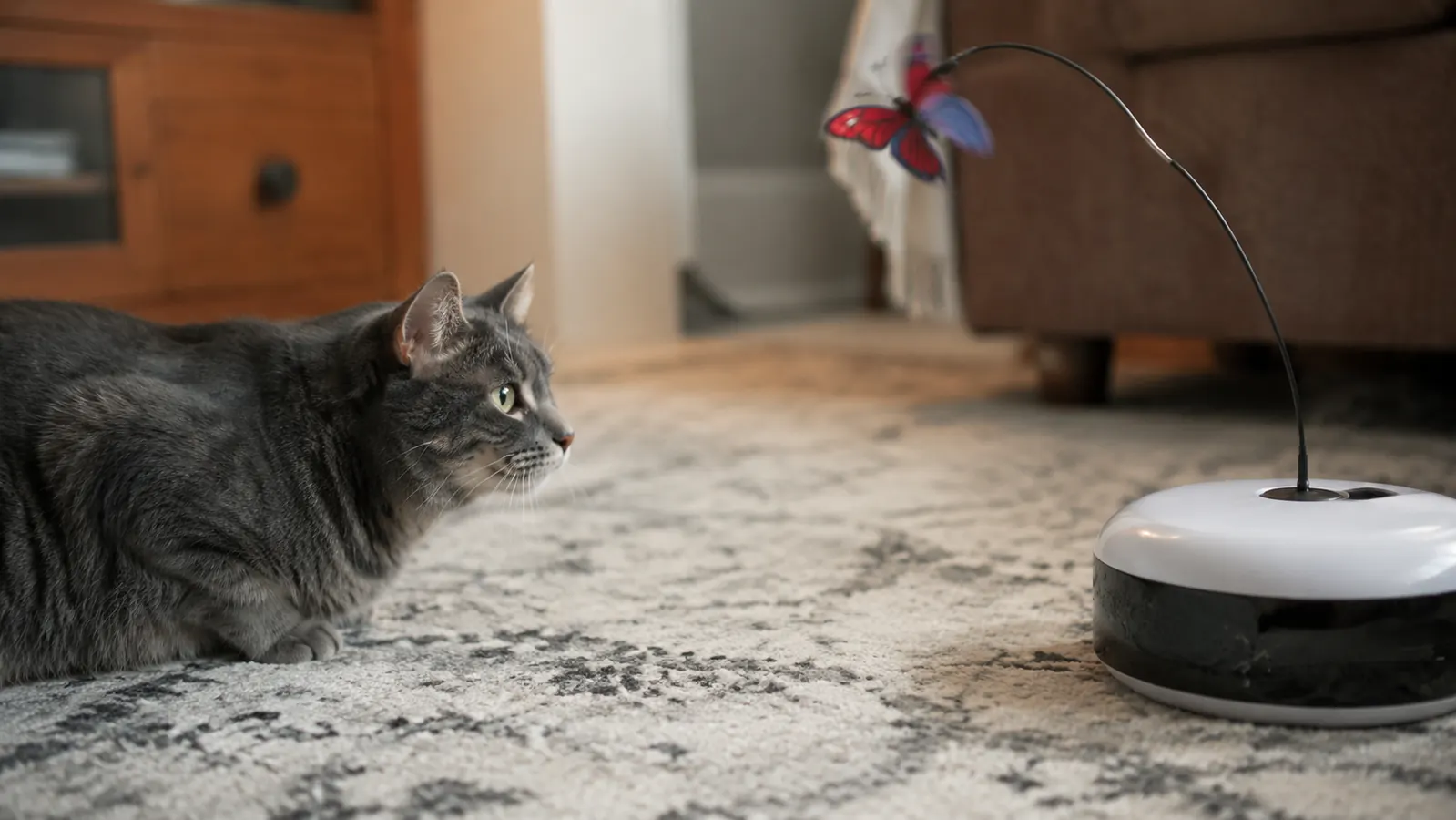
Pickle is six years old, weighs 11 pounds, and has strong opinions about toys. In three years of living with us, he had dismissed every feather wand we dangled, batted a ball track twice before walking away, and stared at a laser pointer dot with the detached contempt of a cat who knows there is nothing actually there. We were starting to think he had simply aged out of play. Then we picked up the Potaroma Cat Toys 3-in-1 Chargeable Hide and Seek toy in January, mostly out of curiosity, and Pickle proved us wrong inside of five minutes.
We have now been running this toy daily for three months. We know what holds up, what wears out, which of the three modes Pickle actually uses, and when the butterfly feather finally started showing wear. This is the long-term version of that story, not a first-week impression.
The Quick Verdict
The best solo interactive toy we have found for a bored indoor cat who has ignored everything else. The hide-and-seek mechanic is the key differentiator, but the butterfly feather needs replacing around month two.
Amazon Check Today's Price →Your bored indoor cat has probably already rejected three toys this year. This one works differently.
The Potaroma 3-in-1 runs on a USB charge, rotates between hide-and-seek, butterfly, and ball modes automatically, and costs about the same as a Saturday lunch. It is what finally got Pickle moving every single day.
Amazon Check Today's Price on Amazon →How We Tested It
Our test setup was simple: one toy, one cat, one location. We placed the Potaroma in the living room on the hardwood floor, charged it fully on day one (it charges via included USB cable, takes about two hours), and turned it on every morning around 8am for one 15-minute session. We did not redirect Pickle toward it. If he engaged, he engaged. If he walked away, we noted the session length and moved on.
We tracked three things over the 90 days: average session length, which mode initiated the engagement, and any physical wear or mechanical issues. We also ran two shorter evening sessions per week starting in week five, once we saw that Pickle was actively looking for the toy. That was not planned. It was just the obvious response to a cat who kept sitting next to the cabinet where we stored it.
One variable we want to be honest about: Pickle is a solo indoor cat in a two-bedroom apartment. He has no other cat to chase, moderate vertical space with one cat tree, and a predictable daily routine. If your cat has a more stimulating environment, your engagement numbers may look different. That context matters when reading our results.
The Three Modes and Which One Pickle Actually Used
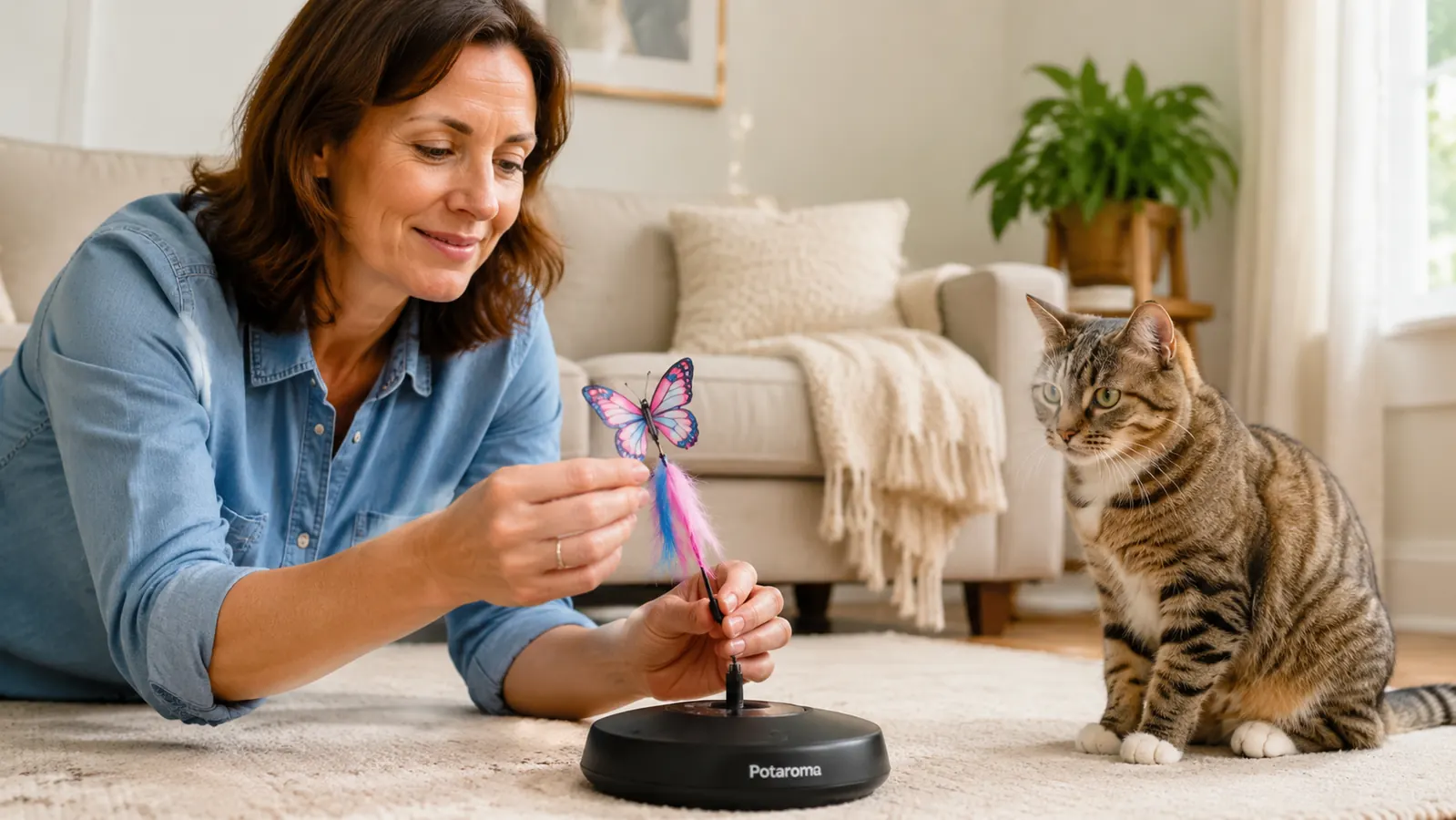
The Potaroma 3-in-1 runs three modes in rotation: a hide-and-seek mode where the feather pops up and retreats unpredictably through holes in the top dome, a standalone butterfly mode where the feather spins and flutters above the unit, and a ball-track mode where a ball rolls around the base ring. You can set it to cycle through all three automatically or lock it to one mode via the button on the bottom.
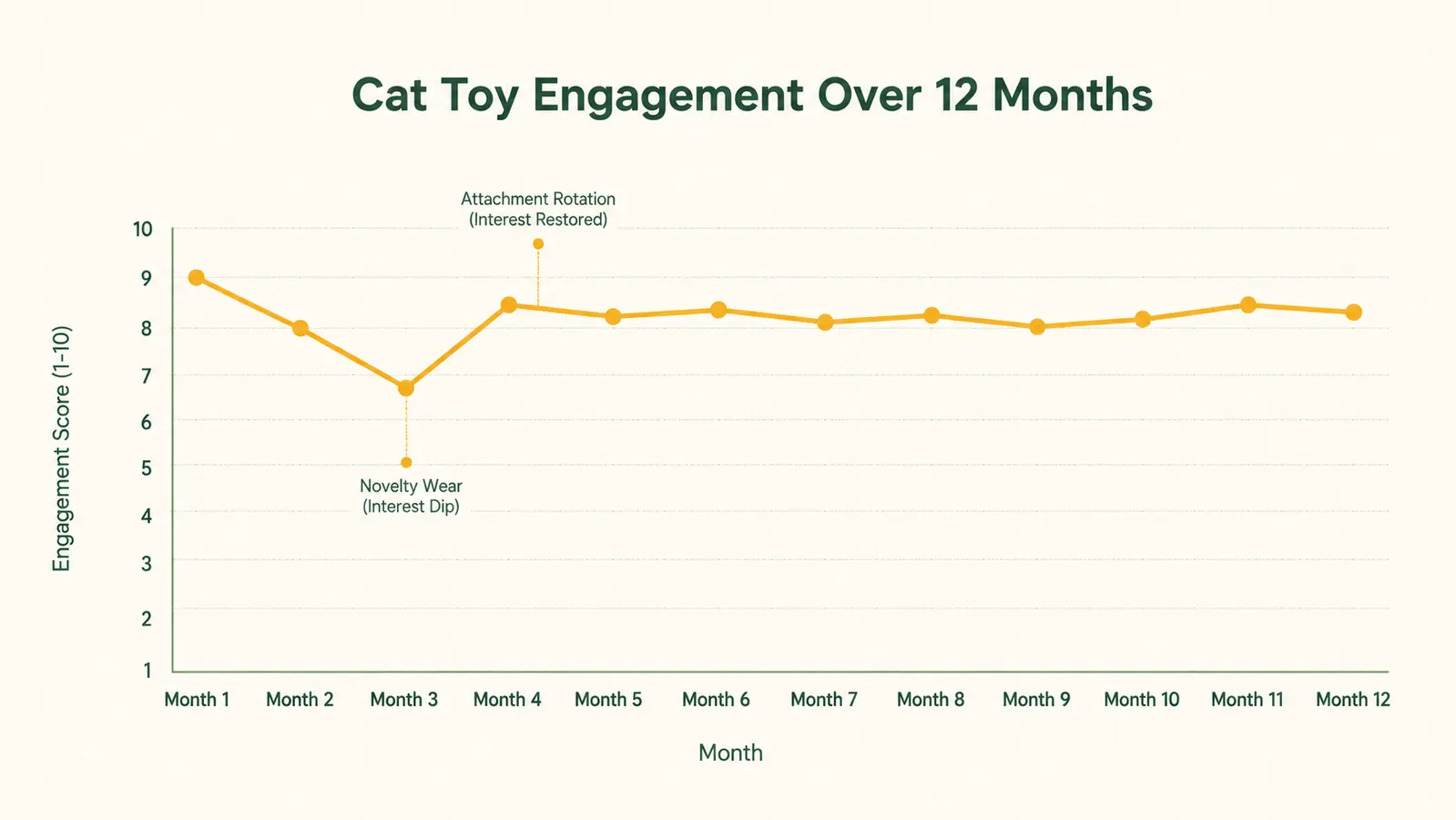
In three months of testing, the hide-and-seek mode was responsible for approximately 80 percent of Pickle's engagement time. The unpredictable popping motion is the thing that actually works for a cat who has outgrown predictable toys. The feather appears, disappears, reappears somewhere else. Pickle never quite knew where it was coming from next, and that uncertainty kept him locked in far longer than anything we had tried before. Average session length in month one was four minutes. By month three it was closer to twelve.
The butterfly mode got brief attention, especially in the first two weeks before Pickle understood the pattern. Once he figured out the feather just spins in a circle, he would watch it for about 90 seconds and then walk off. The ball track was almost ignored entirely. Pickle sniffed it on day one and never touched it again. We mention this not as a flaw but as context: if you have a younger, higher-energy cat, the ball and butterfly modes may pull more weight. For a middle-aged indoor cat, hide-and-seek is where the value lives.
Battery Life, Charging, and Daily Reliability
On a full two-hour charge, the Potaroma ran for roughly 90 to 100 minutes of active use before the motor slowed noticeably. Given that we were doing 15-minute morning sessions, a single charge lasted about six days. We fell into a routine of charging it on Sunday evenings. In 90 days we had zero failures, no shutoffs mid-session, and no motor noise complaints. The unit runs quietly enough that Pickle did not startle when it first activated, which matters more than it sounds. Sudden loud clicks or grinding motors kill engagement immediately with a cautious cat.
The one reliability note worth flagging: around day 40, the feather started catching on the lip of the pop-up hole slightly. It did not jam, but there was a visible hesitation in the motion. We pushed the feather stem down slightly and reseated it, and the motion returned to normal. This has not recurred since. We would still count it as a minor mechanical note, not a defect.
The Butterfly Feather: Lifespan and Replacement
The butterfly feather is the most consumed part of this toy. Pickle is not a destroyer by nature, but daily sessions of swiping and occasionally catching the feather add up. By day 55, the feather was visibly frayed and had lost about a third of its surface area. By day 70, it was a sad little stick with some strands attached. Potaroma sells replacement feathers, and we ordered a two-pack after the first month just to stay ahead of it. Swapping them out takes about 30 seconds. The replacement feathers are identical to the original and the engagement did not drop when we switched.
If you buy this toy, order the replacement feathers at the same time. Treating the feather as a consumable rather than a permanent part of the toy is the right mental model. Think of it like replacing a flirt pole attachment every few months. The base unit should last years. The feather is the thing you will need to refresh.
By month three, Pickle was sitting next to the cabinet where we store the toy. A bored, indifferent cat does not do that. Something in the hide-and-seek mechanic finally scratched the itch that years of other toys had missed.
Physical Build and Material Quality
The Potaroma is made of white ABS plastic with a rounded dome shape. After 90 days on a hardwood floor it has two small surface scratches from Pickle's claws landing on the dome, but the structure is fully intact, nothing has cracked or flexed, and the USB charging port cover is still snug. The base is weighted enough that Pickle cannot flip it over mid-session, which was a problem we had with an older ball-track toy that he would knock on its side within 30 seconds.
The non-slip feet on the bottom do what they say. On our hardwood floor the toy moved maybe two to three inches during an aggressive session, nothing dramatic. On carpet it would move even less. The ball track ring around the base feels slightly thinner than the dome unit itself, and we would not be surprised if a more destructive cat could crack it over time, but for Pickle it has held up without issue.
Alternatives We Considered Before Buying This
Before landing on the Potaroma, we tried three other approaches. A standard wand toy with a feather attachment worked fine when we were actively wielding it, but Pickle needed stimulation during the workday when nobody was home. The wand only solved the weekend problem. A motion-activated ball with an LED center held Pickle's attention for about three days before he categorized it as non-threatening and walked away. A pop-up tent with crinkle tunnels got some initial exploration but no sustained hunting behavior.
The difference with the Potaroma is the combination of an unpredictable motion pattern and something that actually disappears and reappears. Cats are hardwired to investigate prey that hides. A ball that just rolls around a track does not trigger that instinct the same way. The hide-and-seek mechanism is not a gimmick. It is the feature that makes this toy fundamentally different from the category it lives in.
For comparison: a laser pointer costs almost nothing and creates a very similar pursuit response, but it has one critical flaw. Cats that play with laser pointers frequently show signs of frustration because the hunt never ends in a catch. There is no physical target to grab. The Potaroma feather can be caught, batted, pulled at. That moment of physical contact at the end of the stalk is what closes the hunting loop and leaves a cat calmer after play rather than amped up and restless. We wrote more on this in our comparison of the Potaroma toy vs laser pointers.
What I Liked
- Hide-and-seek mode reliably engages cats who have lost interest in predictable toys
- Quiet motor that does not startle skittish or cautious cats
- USB rechargeable with roughly six days of 15-minute sessions per charge
- Non-slip base stays planted on hardwood and tile
- Replacement feathers are easy to swap and inexpensive
- Three modes give you flexibility to find what works for your specific cat
Where It Falls Short
- Butterfly and ball-track modes provide limited engagement for adult or senior cats
- Feather wears out in six to eight weeks of daily use and must be replaced
- Minor feather-catching issue at day 40 required manual reseating
- White plastic shows scratches over time, though structural integrity holds
- Timer-off function shuts the toy down after 15 minutes, which some cats find abrupt
Who This Is For
This toy is the right call if you have an indoor cat between roughly two and eight years old who shows signs of boredom but resists the toys you have tried so far. Furniture scratching, midnight zoomies, excessive vocalization, and knocking things off shelves are all boredom signals. The Potaroma gives that cat a hunting outlet during the hours you are at work or asleep. It is also a strong fit if you are a single-cat household where there is no feline playmate to provide natural stimulation. Pickle fits that profile exactly, and the results over three months have been consistent and measurable. Read more about why indoor cats specifically need this kind of structured play in our guide on 10 reasons indoor cats need interactive play every day.
Who Should Skip It
If your cat is over ten years old and has genuinely low energy due to age or a health condition, the Potaroma may produce only mild interest. Senior cats often need slower, softer stimulation closer to their body rather than something that pops up unpredictably. Kittens under six months may love the chaos of it but can also be rough enough to damage the feather in days rather than weeks, turning the consumable cost into a more frequent expense. And if your cat is already highly active, lives with a companion cat, or has robust outdoor access, the Potaroma is a nice supplement but probably not a must-have. It is built for the under-stimulated solo indoor cat, and that is exactly where it delivers.
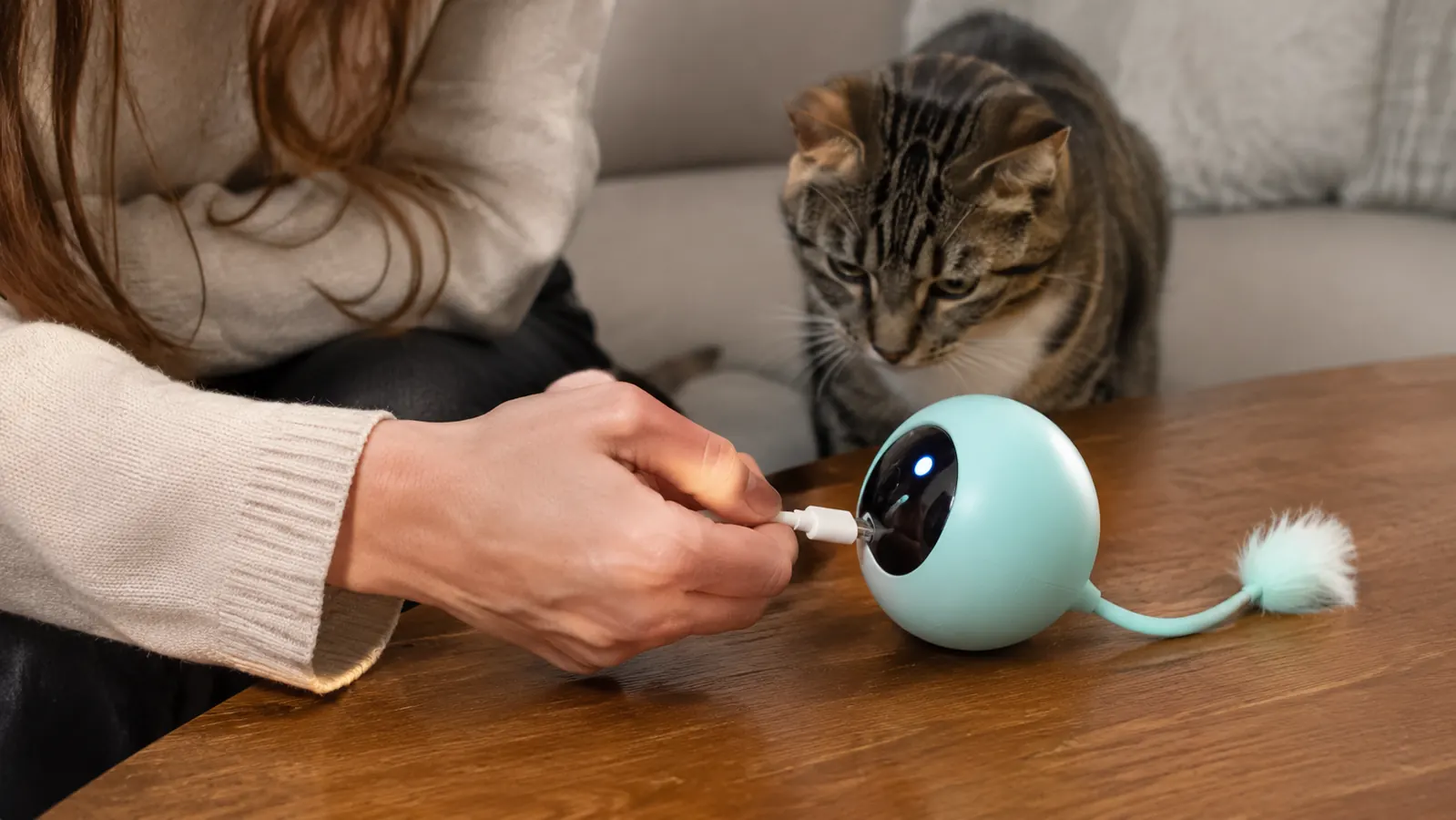
Three months later, Pickle looks for this toy. That is the only endorsement that matters.
The Potaroma 3-in-1 costs less than most cat toys that your cat will ignore by week two. The hide-and-seek mode is genuinely different from anything else in this price range. Check current pricing and availability on Amazon.
Amazon Check Today's Price on Amazon →