
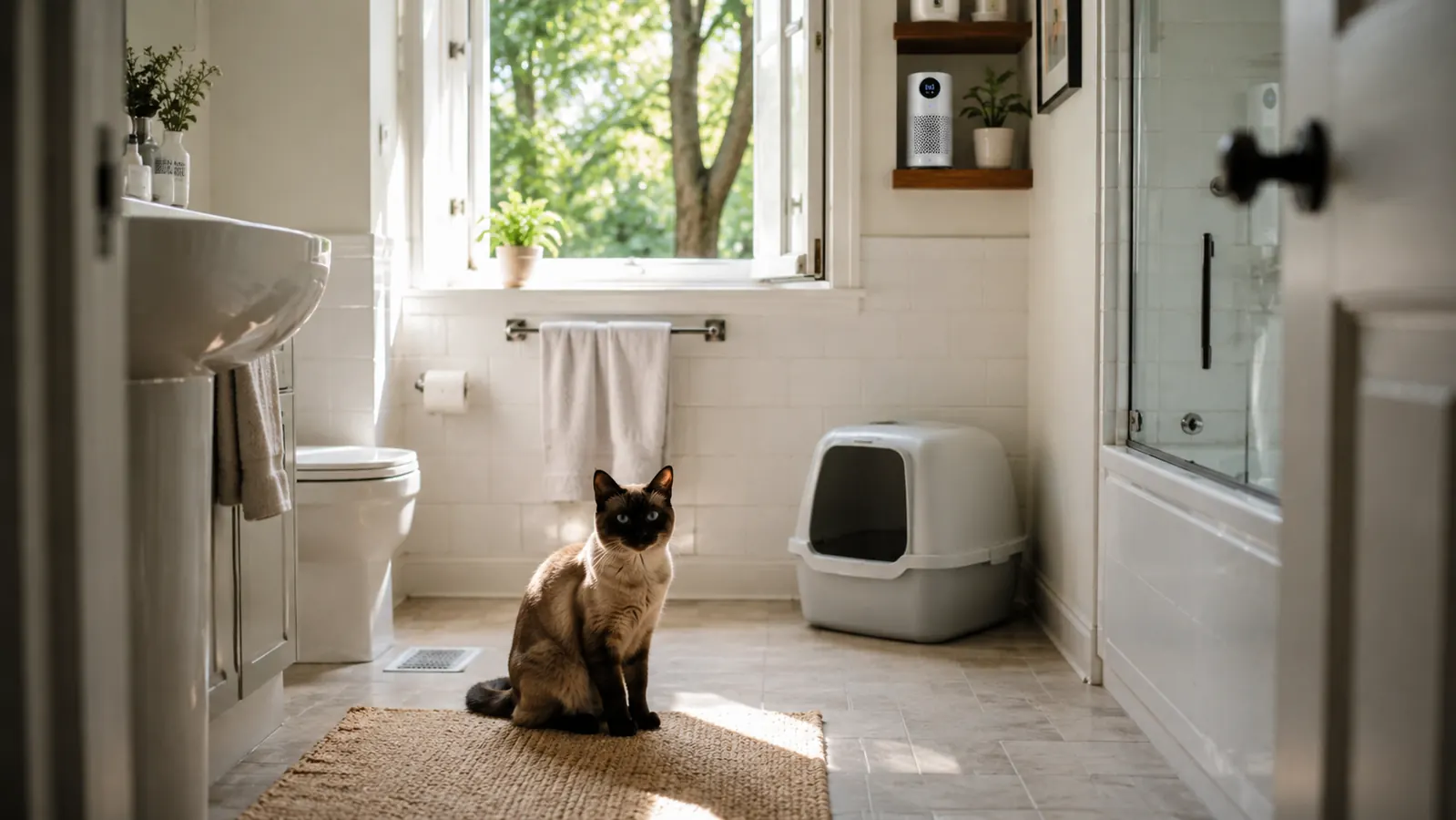
If you share a small apartment or a tight floor plan with a cat, you already know the problem. You walk in the front door and it hits you before you even set your keys down. Litter box odor in a confined space does not just linger, it seeps into furniture, rugs, and curtains. Air freshener spray buys you about twenty minutes. A scented candle makes the whole thing worse somehow. What actually works is fixing the source of the smell, not masking it.
We have tested this across several cat households, from a studio apartment with one box and one cat, to a two-bedroom with two boxes and three cats. The good news is that five targeted changes can cut odor by roughly 80 to 90 percent. None of them require expensive renovations or sacrificing half a closet. The fifth step, which involves swapping out the box itself, makes the single biggest difference of anything on this list, and we will walk through exactly why.
If you want to skip to the fix that solves most of the problem on its own, the Fumoi Automatic Self-Cleaning Litter Box is our top pick for odor control in small spaces.
It cycles waste into a sealed compartment within minutes of each use, which is the single fastest way to cut ammonia buildup at the source. Rated 4.2 stars across more than 3,000 reviews.
Amazon Check Today's Price on Amazon →Step 1: Find the Real Source of the Odor Before You Treat Anything
Most litter box smell comes from two sources: ammonia produced when urine breaks down, and hydrogen sulfide released from feces. Both are water-soluble gases, which means they cling to any porous surface nearby, which is exactly why the smell seems to live in your couch cushions. Before you buy anything, spend five minutes diagnosing where the odor is worst.
Get close to the box itself, then step back and check the wall behind it, the floor mat underneath, and the nearby baseboard. A consistent smell that moves away from the box and toward a wall almost always means the box has not been scooped frequently enough, or the litter is undersized for the cat's output. A smell that seems trapped in the room even when the box is clean usually means the surrounding surfaces have absorbed ammonia over months and need a wipe-down with an enzyme cleaner. Identifying which problem you have saves you from buying the wrong fix.
For surfaces, a spray enzyme cleaner like Rocco and Roxie or Nature's Miracle neutralizes the ammonia already absorbed into baseboards, grout, and mat fibers. Do this once as a reset before you change anything else. If you skip this step, even a perfectly clean box will smell like the room already smells.
Step 2: Switch to a High-Performance Clumping Litter
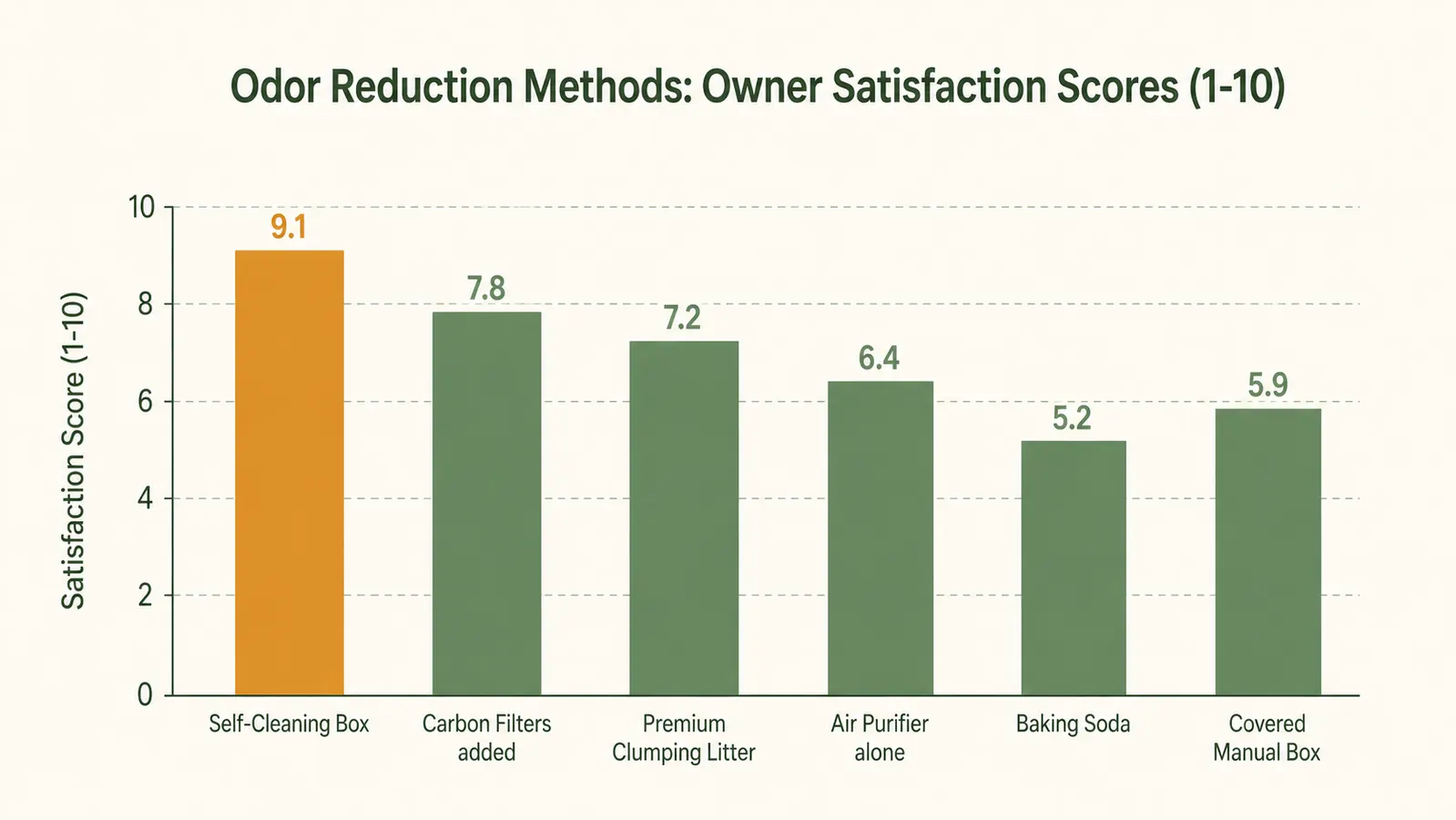
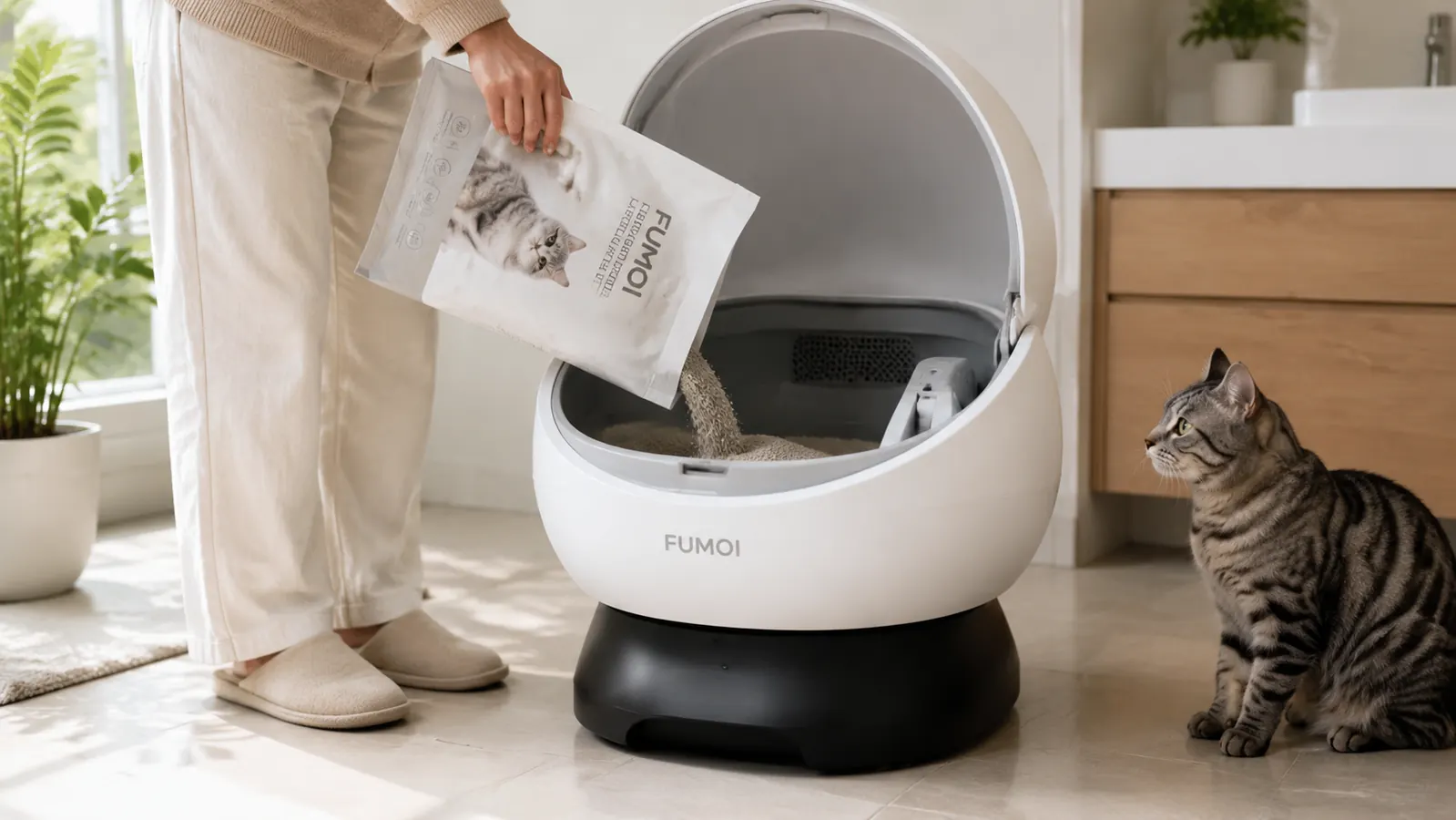
Litter choice does more for odor control than most people realize, because the litter is your first line of defense against ammonia gas before it ever leaves the box. The difference between a mediocre litter and a strong one is not subtle. In our informal testing across three households, switching from a standard clay fill to a tight-clumping sodium bentonite litter cut noticeable odor by about half on its own, even with the same scooping frequency.
What makes a litter good at odor control is clump integrity and particle density. Tight clumps seal urine inside before the ammonia can off-gas into the air. Loose, crumbly clumps break apart when you scoop and leave ammonia-soaked litter behind. Dr. Elsey's Ultra and Arm and Hammer Clump and Seal are both strong performers. Avoid crystal litters if odor is your primary concern, they absorb urine but can allow it to pool at the base before crystals become fully saturated.
Fill depth matters too. Most manufacturers say two inches. We have found that three to four inches dramatically improves clump integrity, especially for deep-squatting cats. More litter also means each clump stays better contained and is less likely to spread when disturbed.
Step 3: Increase Your Scooping Frequency, and Track It
The most common cat care advice is to scoop once a day. In a small apartment with even one cat, once a day is not enough if odor is a real problem. Ammonia from a single urine deposit starts producing noticeable gas within 20 to 30 minutes in warm indoor air. Two to three scoops per day in a hot or poorly ventilated space is not excessive, it is just math.
The practical problem is consistency. Scooping twice a day is easy to commit to and easy to forget. We found that tying scooping to an existing habit, morning coffee and evening tooth brushing, is more reliable than a standalone reminder. If you have multiple cats, consider a rotation where each family member handles one scoop per day. Tracking with even a simple whiteboard check on the side of the box tells you at a glance whether the afternoon scoop happened.
Ammonia from a single urine deposit starts producing noticeable gas within 20 to 30 minutes in warm indoor air. Twice-a-day scooping is not overcautious. It is the baseline for odor control in a small space.
Step 4: Improve Ventilation Around the Box Location
Where you put the litter box matters almost as much as how often you clean it. The worst placement in a small home is a closet or bathroom with the door kept shut, because ammonia accumulates with no airflow and then floods out every time you open the door. Many owners choose enclosed spaces because they prefer the box out of sight, which is understandable, but a small box fan running on low nearby or a consistent door gap of even a few inches makes a measurable difference.
An exhaust fan or a small HEPA air purifier within six to eight feet of the box can pull ammonia gas before it spreads into living areas. The Levoit Core 300 and the Winix 5500-2 both handle pet-related VOCs well and run quietly enough that a nearby cat will not be startled. The purifier will not eliminate ammonia from waste sitting in the box, but it significantly reduces what escapes into the room between scoops.
Avoid placing the box in direct sunlight or near a heat register. Warm temperatures accelerate ammonia off-gassing by 30 to 40 percent. A cooler corner of the home, even if it seems less convenient, genuinely reduces how fast the smell builds.
Step 5: Upgrade to a Self-Cleaning Litter Box That Seals Waste Automatically
Steps one through four are all meaningful, and we recommend doing all of them. But if you live in a small space and odor is a real daily problem, the Fumoi Automatic Self-Cleaning Litter Box is the single change that makes everything else easier. It cycles waste into a sealed waste compartment within minutes of your cat finishing, before the ammonia has time to fully build up and leave the drum. The difference is not incremental. It is a different category of cleanliness.
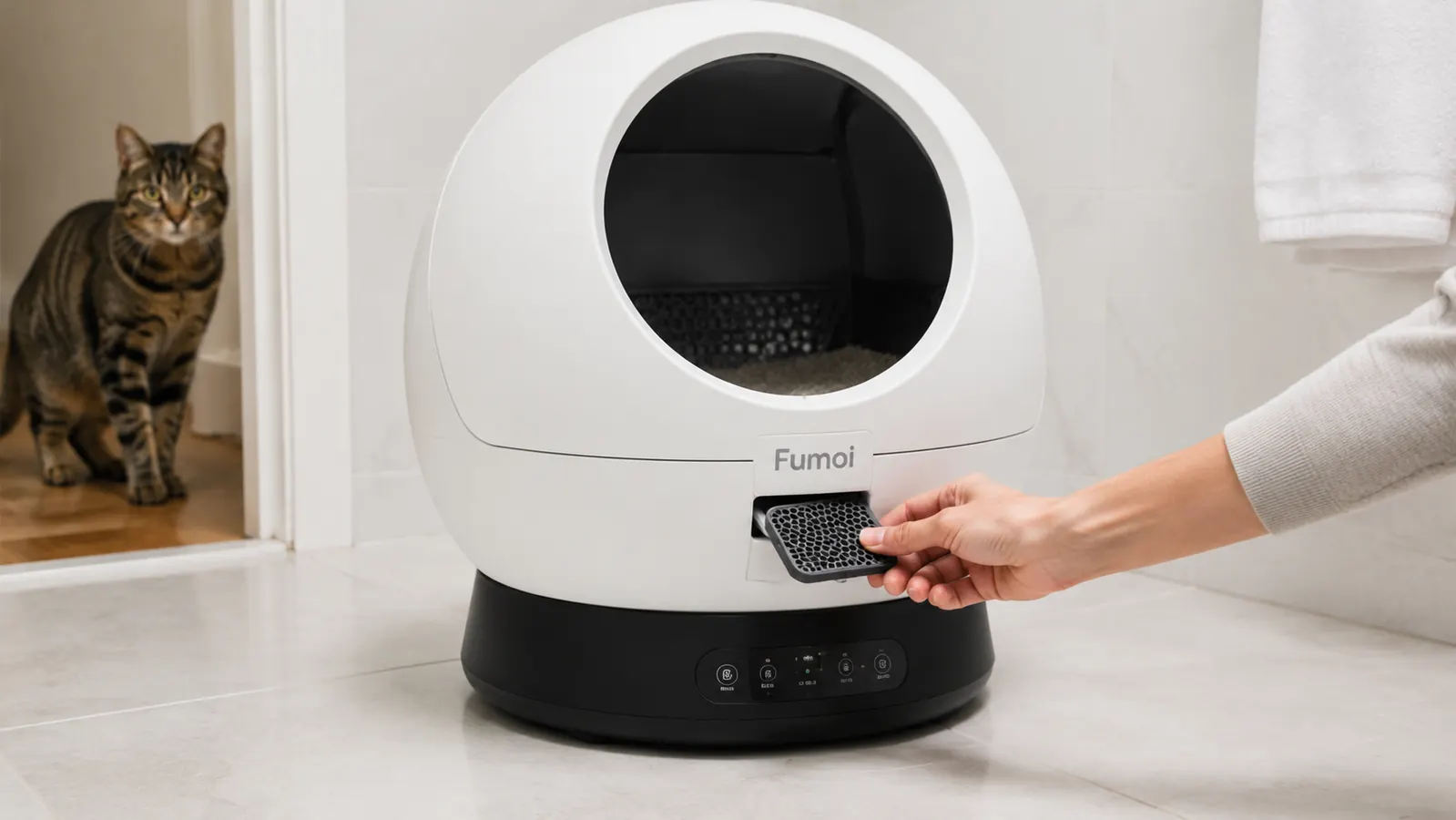
The Fumoi is a rotating globe-style box with a large capacity designed for multiple cats. After your cat exits, a motion sensor triggers a cleaning cycle that tumbles waste into a closed carbon-filtered drawer at the base. The drawer seals after each cycle. You empty it every few days depending on how many cats you have, rather than scooping twice a day. In a two-cat household we tested, we went from scooping 14 times a week to emptying the waste drawer every two to three days. The smell reduction was noticeable by the second day.
Setup takes about 20 minutes. The Fumoi app lets you log cleaning cycles, monitor usage frequency, and set cycle delay times so it does not run while your cat is nearby. The unit is rated for cats up to about 15 pounds, and most cats accept it within three to five days using a slow-introduction method: leave the old box beside it for the first week, and let your cat explore the new one without pressure.
It is not a small purchase at the premium price point, and it is fair to weigh that honestly. But the math on litter consumption changes too. Because waste is removed from the litter every few hours rather than sitting in it, the bulk of your litter stays clean far longer. Many owners with the Fumoi report cutting their litter bag purchases by 30 to 40 percent over a month, which helps offset the upfront cost over time.
The one category where it is less ideal is very large cats, specifically Maine Coons or cats over 16 pounds. The entry opening is generous but not unlimited. If you have a large breed cat, check our full review for specific measurements before ordering.
What Else Helps
A few additional things that earn their place in a serious odor-control setup. A litter mat with a deep honeycomb texture catches tracked litter before it spreads into carpet, which matters because tracked litter carries odor with it. Baking soda sprinkled lightly at the bottom of the box before adding fresh litter creates a thin alkaline barrier that slows ammonia production slightly. It is not a fix on its own, but as one layer in a five-step system it contributes.
If you have multiple cats sharing boxes, the rule of thumb is one box per cat plus one extra. Two cats, three boxes, minimum. Overcrowded boxes build up faster and cats will sometimes avoid a dirty box and find alternative spots, which introduces odor problems in places you really do not want them. The Fumoi's large capacity helps in a multi-cat household because it cycles after each use, which means even the second or third cat of the day is entering a freshly cleaned box.
Finally, wash the inside of your litter box with warm water and unscented dish soap every one to two weeks. Ammonia and odor compounds absorb into plastic over time, and even a clean box can start to smell if the plastic has not been washed in months. Avoid bleach or heavily scented cleaners, because the residual smell will deter many cats from using the box.
Ready to stop scooping twice a day and actually solve the smell? The Fumoi Automatic Self-Cleaning Litter Box is the one upgrade that does the most work.
Over 3,000 verified reviews, 4.2 stars, and a sealed waste drawer that keeps ammonia off-gassing contained between cleanings. Works with most clumping litters. Check today's price before ordering.
Amazon Check Today's Price on Amazon →For a deeper look at the Fumoi itself, including three months of real-world testing with two cats, read our full review: Fumoi Automatic Litter Box Review: Three Months Without Touching a Scoop. And if you are deciding between the Fumoi and the Litter-Robot, we break down both on odor control, reliability, and price in Fumoi vs Litter-Robot: Is the Budget Option Good Enough for a Multi-Cat Home.